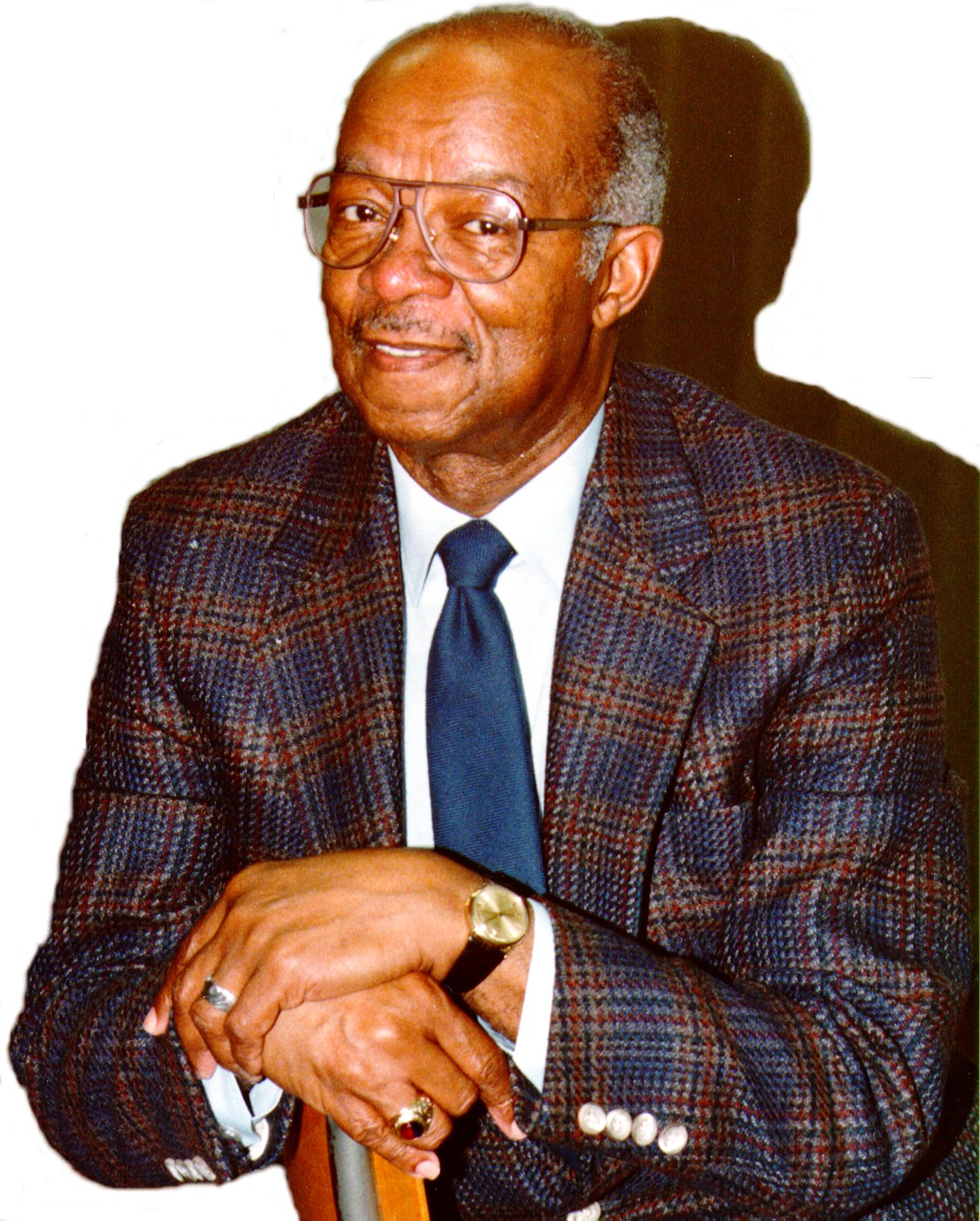
Hesham Sabry holds a BSc Engineering (1972),
and a joint Honours Psychology-Anthropology, University of Waterloo
Cross Cultural Maturity
June / July 1992
~ ~ ~ ~ ~ ~ ~ ~
Are the people of one culture more mature than those of another? Some will answer in the affirmative. How many times have I heard a people described as socially and politically immature, while they in turn were being made fun of and called childish? How often have some been described as unrefined, yet they describe other cultures as insensitive or socially naive?
As another example, peoples who are socialized to be modest and humble are regarded as weak or inferior by societies where arrogance and conspicuous consumption are seen as strength. Similarly, peoples whose liberal expression of gratitude and appreciation are a fundamental part of their ethical code might be viewed as ingratiating or subservient.
From where does the discrepancy in the views of those cultures arise? People from different cultures sometimes describe each other in unfavourable terms, although the persons criticized are respected individuals and are what a mature man or woman is expected to be in their own culture. So why does it happen that they sometimes form negative views of each other?
The reason may be found in the way people in many societies seem to define maturity. In most cultures, but especially in North America, the tendency is to judge people on one and only one criterion, that of their social skills – their competence on various social occasions. How well they mix and socialise at a cocktail party, how good they are at small talk, how well they can squeeze a joke or humour in a speech they are giving …
This kind of attitude presents two major problems. One is that what is socially attractive, proper or appropriate in one society may be the exact opposite in another one .. we can see the potential trouble here.
The second major problem is that social competence in any society is not a dependable measure of general maturity, the kind that would allow mutual understanding between what may be fundamentally different cultures.
Social skills are learned superficial motions that are acquired as the individual grows up. In time, a whole repertoire of different ‘scripts’ is compiled, one to fit almost each social occasion we are likely to encounter during our lifetime, in our own societies. These become spontaneous, so that the script specific to a situation is automatically activated whenever the need arises.
As a result, we may very well be totally thrown off balance, feel lost, and behave haphazardly when we are put in a situation for which we do not have a pre-learned script. Then we might be seen as immature, rude or whatever – since it is human nature to attribute one’s behaviour to one’s personality rather than to the situational circumstances. What’s more, these attributions are then further generalized to include one’s whole ethnic race, culture or religion … in short, what is referred to as stereotyping.
This state of affairs goes to show that social competence is only an outer veneer and is not at all indicative of anything except that those persons have well assimilated the social skills of their culture. It is certainly not an indication of how those persons will behave in crises, how responsibly they will deal with problems at home or at work,, and so on with other core issues of their lives. Therefore:
(1) the differences in what would be considered socially competent behaviour in diverse cultures, and
(2) the superficiality of that criterion as a measure of other characteristics of maturity and personality, when we combine those two problems, we come up with the clash of cultures.
Imagine yourself at the cash counter of your favourite supermarket, the usual comment on the cold and snow in winter is how terrible it is and how you look forward to spring; but imagine yourself saying how much you love the cold and snow .. you have broken the code of small talk .. and .. you have totally confused the poor cashier as to how to respond, not only that, but you have probably also classified yourself as a freak, or whatever else, by this one comment.
The examples abound of situations in which misunderstandings can and do arise, sometimes because of erroneous preconceptions or expectations, but most often because of a failure to operate beyond the bounds of our learned social scripts. That is where trouble breeds. Racism and prejudice are the most common accusations made, and naturally, when one party is a minority within the dominant society, these feelings can run amok.
So, where and how does maturity fit into all this? What is maturity then, if the social skills upon which we base our judgements of others may turn out to be no more than just attractive exteriors to sometimes empty shells?
One important aspect of maturity, I believe, is the ability to cope with new, difficult or unexpected situations, by drawing on a core of flexibility and adaptability. In a cross cultural context, that would mean being able, on occasion, to temporarily put aside our long learned customs, in order to accommodate those of others; being able to accept, appreciate, respect and even enjoy the ways and traditions of others.
That flexibility in any person, of any culture, will probably be reflected in his or her other behaviour as well. People who are flexible enough to compromise the differences they have with other cultures are probably the persons who will be just as mature and more able to handle and solve problems, more able to put themselves in other peoples’ shoes and see things from their perspective, and so on.
Perhaps if we do not adhere so strongly to our learned social behaviours when we deal with other cultures; if we do not see ourselves and our ways as strictly the right ways; if we are flexible enough.. mature enough .. to lessen the partiality we have for our own norms of social behaviour, and look at the substance of other cultures, there might be a chance that accusations and counter accusations of racism and prejudice that mostly arise from misunderstanding other cultures might diminish with time, if not disappear completely!
No culture is inherently hostile to other cultures, none are innately racist. The concept of racism and its practice seems to arise with time and through extended contact, and even though economic and other factors are sometimes cited as causes, I believe that our social misconceptions are almost always what spark the ensuing great divide.
One Religion, Two Religions, Three Religions, Four
August / September 1992
~ ~ ~ ~ ~ ~ ~ ~ ~ ~ ~ ~
Are you a Jew ?” one of two young men asked from the front of my stall at the Victoria Park multicultural festival last July. “Yes”, I answered, “and a Christian, Moslem, Hindu, Buddhist, Sikh, Bahai and every other religion; are you interested in Jewish scenes from the Holy Land ?” I asked. He was not, he was just asking because his eye had caught a print of the Wailing Wall in Jerusalem, one of the reproductions of 19th century woodcuts of Christian, Jewish and Moslem Holy sights, among other prints, that I was selling on that day.
“So you believe in Jesus Christ ?” he asked. “I believe in all religions” I answered, and, without realizing that once more I was stepping into the no man’s land I had so often found myself in, I went on to say that all religions were good and the only bad thing I thought they all shared was the part where the followers of each believed that they were the true, legitimate faith and all others fake. My solution to the problem, I added, had been to believe in them all, but follow none.
“So you don’t believe in an afterlife or a heaven and a hell”, he said. Having stood by my conviction for many years, I have learned that to love all people and all faiths is to ask for all faiths’ and all people’s dis-favour. I have learned that if you love ‘us’ and ‘them’, you neither belong to ‘us’ nor ‘them’, you belong in ‘no man’s land’.
Still that has not discouraged me, and my answer was one that I had given many times before and which was proving to be true more and more as the years went by: “regardless of whether heaven and hell do or don’t exist in an afterlife”, I said, “I know that they do exist in this life, because in that respect, I have had first hand experience. I’ve lived through both, on and off, and have seen others go through the same in their lifetimes; so I don’t feel I need an afterlife to motivate me. When you find out that what you do today determines what happens to you tomorrow, decides whether coming years will be heaven or hell for you and yours, you don’t need the assurance nor the fear of an afterlife”.
“So you don’t believe in a second chance to live in heaven after death ?” was the next comment. “I believe in second and third chances” I replied, and went on to explain that I believed that we do not ‘live only once’. How often have we felt, or heard friends tell us how in their school days or when they lived in some other place their lives were so different that it was as if they had been somebody else…. As we grow up we change continuously, we basically become different persons every few years and practically remember our earlier years and experiences as if they had been in previous lives. At twenty we are not the persons we were at ten and so on. In the same way, the future holds new lives for us. Our present life is the afterlife of earlier years, and our future will be the afterlife of our present years; all in one lifetime. From the perspective of the ‘heaven-hell’ dichotomy, we may have been in hell as children and now we are experiencing heaven, or we may have been in heaven and still are, and so on.
“But then what do you think of religion ?” “Unfortunately”, I replied, “as we all know, the followers of various religions, sects and denominations are killing each other in many parts of the world in the name of religion”, and went on to explain that that had been one of the reasons I had resolved that question long ago, but only after reading and studying many different religions, since it did not make sense that being born into a religion automatically made it right (in fact, I believe it is an aspect of religious fanaticism).
I had come to the conclusion that all faiths were of the same essence: ‘there is a ‘whatever power(s)’ that has an effect on people’s lives, and that seems to wish us to do good by our fellow humans, a power(s) which we may fear, respect or love and which we pray to for deliverance or help, especially in times of need and hardship’. Be it an invisible or visible god or gods, a human being, a statue, an animal, fire or whatever, it all amounts to the basic belief in a supernatural power(s) that can do what humans cannot.
Making that power a single deity, a male, and invisible, as in monotheist religions, does not make it better or the best, for that one god is still a symbol even in its oneness and invisibility, and one symbol is the same as another. What does matter above and beyond the symbol is that the goal of all religions is to please the particular supernatural power(s) they believe in mainly by doing good.
In that sense, both the use of a symbol and the holiness assigned to that symbol, equalise all faiths, regardless of whether they agree on the symbol’s form or not. Again, oneness and invisibility do not make one choice better or greater than the other; The label, the symbol, and the rituals, are meaningless as a basis for separating peoples into heathens and believers. The essence is the same, only the mechanics are religiocentric [i.e. everyone thinks their religion is the right one, their god(s) is the right god(s)].
In other words, even though the rituals, the symbols, the prophets and the deities may vary, they are the same in substance: non of those deities says ‘thou shalt kill’, ‘thou shalt steal’, ‘thou shalt cheat’.
That being the case, I have, after a period of atheism, followed by a period of agnosticism, interspersed with many experiences and lessons in life, both good and bad, come to the conclusion that, after all, there does seem to be an all-powerful governing deity (or deities) – which for all intents and purposes I might as well call ‘God’- that can and does have a certain amount of control over our lives, and that believing in a ‘God(s)’ really means, according to my earlier argument, believing in all religions.
Now that I’ve finished offending all religions, as regardless of my good intentions, I know I must have; let me add that with my eventual coming to the above conclusions and beliefs years ago, I also came to a feeling of peace and serenity. I could not but admire the good found in all religions rather than search for the bad; accept them all, rather than take the negative stance of rejecting them, which would not, I felt sure, have pleased the ‘God’ I had come to believe in.
After all that, there is one thing I’m not so sure of, and that’s whether or not a clause should be added to my belief system stating ‘thou shalt not stand at the multicultural fair and chat about religion when there are wares to sell and clients to serve’, especially that it was my first time to be selling at a fair; but then again, that’s the fun of it all.
Religion Goodbye – Religion Hello
THE FOURTH CHOICE
October / November 1992
~ ~ ~ ~ ~ ~ ~ ~ ~ ~ ~ ~
“There is no God. There can’t be …. “. These are words we sometimes hear, from young and old alike. There are also people who are not sure, and others who are ‘searching’.
There seem to be three clear and a fourth less clear choice for us.
The easiest choice is to hold on to a religion, without trying to tackle its various questions. In ‘belonging’ there is social support, a feeling of security, and an end to the brain racking process of trying to reason things out for one’s self. It also gives order to the world and the things we don’t understand that happen in it. If things go wrong, God must have a divine reason for it, if they go right, God wants it that way for us. We are comforted by the thought that those who sin shall pay for their sins in the after world.
If we choose the second path – to reason things out – we still find that we have an almost instinctive need for a structured religion (that tells us what to do, whom to worship, how, where, when etc.), yet at the same time, our mind wants to find the truth; a truth that is most elusive .. we find ourselves in a state of spiritual turmoil. Still – when nothing else seems to work – we can attempt to seek comfort from the god which we believe may or may not be there.
If we choose the third path – which is simply not believing in a creator(s)- we are then on our own. It is true that we seem to have set the matter aside, and hence our minds to rest, but on the other hand, when things beyond human control go wrong, we can’t seek the comfort of something we don’t believe in, nor do we have the support system that belonging to a religion might offer.
In spite of the difficulties of such a choice, it is easy to see why so many people desert their religions nowadays, or only adhere to them for the sake of the comfort, security or need mentioned earlier. Others remain for the sake of appearances or because of community pressure, while at the same time they are skeptical about the existence of God, or about many of the beliefs or rituals that are part of their religion.
If you believed or felt that there was a God, and your religion said that it was the moon, and as the days went by, you gradually realized (or learned) that the moon was only a ball of rock which could not be what created nor governed humans’ lives, you would then decide : “The moon cannot be God .. there is no God”.
That’s one decision many agnostics and atheists have made; they suddenly saw the flaws in some especially critical aspect of their religion. They had also learned about the theories of evolution (which, incidentally, also have their flaws, but that’s another story), so, after some thought, they decided that everything to do with religion was not true. They lumped the whole deal into one piece and discarded it.
What many ignore is that it is not the fault of the real god(s) if we happened to be born into a religion that preached that god was the moon or, for example, that our god could give birth to small moons which could come to our aid if we prayed hard enough.
Say we decide much of our religion is nonsense, we may be right; we find out the moon cannot be God, we may also be right; but that these revelations consequently mean that there is no god is totally out of context, since there is absolutely no connection between the two former discoveries and the latter conclusion, (this is so, regardless of whether there is a god or not). The error we seem to make, is our failure to distinguish between religions per se, and an all powerful deity or deities. If religions are flawed, it does not follow at all that the existence of a god(s) is nullified. It is not ‘God’s` fault that someone told us to worship the moon and we later found out it didn’t make sense.
Unfortunately, with every religion that has intricate rituals, worships specific, describable, labelled gods, has complex creation ‘myths’ and miracles etc., it is easy in today’s ‘enlightened’ world to arrive at the disbelief and skepticism described earlier; hence many stop believing. These people lose faith in all they had believed in since birth, and consequently in anything related from near or far to religions, churches, prophets, or gods. Furthermore, if their religion, which they always believed to be the ‘right one’, turned out to be flawed, then the chances are the others could also be flawed . . . That may be, but what has that to do with the possibility that there is some real ‘god(s)’ who is totally removed from all our elaborate earthly beliefs.
If we have experienced such disbelief and skepticism, what we may not realize is that another option does exist, that of believing in a governing power(s) – the nature of which I hope to discuss in a coming issue – without the mediation of a religion. That is the fourth choice.
Once that point is reached -where everything seems suddenly clear- and we feel that we don’t need one religion or someone else’s mediation to have a relation with ‘God’, we are truly free to respect, enjoy and learn from any religion we come across; it is their humanitarian ideals that concern us now, not their labels and rituals. We might have said goodbye to our religion, but now we can say hello to all religions.
That does not in the least diminish from the deep respect I have for all those who hold on strongly to their faiths; who do so without hate, prejudice or feelings of superiority over others, and, who follow their religion’s teachings, and moral and ethical values in their daily dealings with others. Such people do exist. They are not idealistic figments of my imagination, I have neighbours like that, and so, most probably, do you; or perhaps, you are like that yourself. I treasure them above all, and believe the world would truly be a better place if all people held on to the morals and values that their religions teach them, while at the same time equally respected the religions and cultures of others (see also ‘Cross Cultural Maturity’ in the June / July, 1992 issue of Cross Cultures)
Who cannot but love, respect, and appreciate individuals or organizations that work for humanity: working to feed the hungry everywhere, having gigantic garage sales for charity, trying to form drug free neighbourhoods in the inner city cores of crime infested areas, and so on. It makes me happy to see any faith or person working for a noble and worthy cause; after all, that is the purpose of believing in a god. The true believers of any faith, are those who extend their hands and hearts to others. Their religiosity works the way it should: it is directed towards loving and helping others.
On the other hand, if we have made the fourth choice, if we have lost faith in ‘religion’ as such, but have come to distinguish between this concept and that of ‘god’, we could very well benefit from the good advice that all religions give us on how to treat our fellow humans. That, I believe is, or should be the key issue of all faiths. Each religion teaches different aspects and angles of how to deal ‘properly’ with fellow humans, and we can all profit from each other’s wisdom in that respect.
Freedom of Speech :
David Irving versus Salman Rushdi
December 1992 / January 1993
~ ~ ~ ~ ~ ~ ~ ~ ~ ~ ~ ~ ~ ~
Yes, freedom of speech. A fundamental principle of a democratic society. Nothing and no one has the right to censor it whatever the issue, whomever is concerned, whatever the consequences. Or do they? David Irving and Salman Rushdi. I have never read for the one nor the other. I have not even seen a book by either of them.
Does anyone have the right to insult people of any faith, colour, or race, with impunity in the name of freedom of speech and democracy? The answer – which has been established in practice – is NO; and the people who are a positive role model for how ‘freedom of speech’ that is offensive should be dealt with, are the Jewish community in Canada. It was a triumph for anti-racism and for true democracy -not only for anti-antisemitism- the day David Irving was deported from Canada. It was a victory for every person – native, immigrant, ethnic minority or of any race or faith who might become the target of racists if they were allowed to have their own way. Racism does not pick and choose. The cold blooded murder of Vietnamese and Moslem Turks in Germany lately proves to all of us that anti-Semitism is just another word for racism. What starts with one label or the other, extends to everyone else sooner or later. The Second World War did not distinguish between races, faiths or nationalities. Six million Jews were massacred, and countless other millions of all creeds and faiths suffered the same fate because a mad man was allowed to thrive in the name of ‘democracy’. Do the Jews have to continue alone to shoulder the responsibility of reminding us all, so that it might never happen again? If we, as human beings – minorities and the vast majority of the sane non-racist dominant race- want to secure a safe and prosperous future for our children, we must all join together in the fight against this insanity. A victory for anti-antisemitism is a victory for anti-racism, and a victory for anti-racism is a victory for humanity. We are all in the same boat.
I did not need to read Irving to condemn him. It is immaterial here. If the people whom he addresses in his writings find it racist and offensive, I need not pursue the matter further. If it is offensive to the Jews -if it is racist to them- it is offensive and racist to me. Racism, is racism against humanity, not against this race or that faith. Irving’s writings must clearly emanate from hatred and racism, or he would not write what offends and hurts others.
It is an identical case when an ‘author’, out of personal hatred, writes a book insulting the beliefs of a whole faith.
Surely if it was not the result of hate and racism, Salman Rushdi would have found something better to write about. I have not read nor seen Rushdi’s controversial book, but my point of reference again -and I believe the only point of reference that matters- is how the people concerned feel about the issue. Insulting and hurting other people is no literature; it is no freedom of speech; it is a cheap way of getting attention that should under no circumstances be encouraged or left to thrive while we sit back and watch, unless we want new Hitlers on our hands. It is shameful that a person who has deeply insulted the people of a faith -so that in their millions they expressed their dismay and anger no less strongly than the Jews did about David Irving- should be allowed into Canada, let alone be given the privilege of addressing the parliament. It must be made clear here, though, that the death sentence issued against him by a member state in the United Nations is atrocious and unacceptable behaviour. Yet the one concern has nothing to do with the other. They are two separate issues that should be dealt with separately. Yes we should condemn, and very strongly at that, the deranged behaviour of Iran’s government, but that does not diminish from the distress that Rushdi, with his hatred and racist writing, has caused millions of people who follow a worldwide faith that has nothing to do with Khomeini or his country. In fact, it is significant that thousands of estranged Iranians have themselves condemned their own country’s behaviour and actions. Iran’s death sentence against Rushdi is no justification for us to think that by glamorising the man at the expense of the millions of people whom he offended, we can prove that we are not impressed by Iran’s terrorist behaviour. Two wrongs don’t make a right. Exposing hatred for what it is, is not giving in to Iran or anyone else. It is politically immature and simplistic to connect the one issue with the other. Canada is therefore deluded if it believes that the Rushdi cause is one that upholds freedom of speech, when unfortunately it is upholding insult and hate.
Insult and hate are not freedom of speech. The world is so small that we all need to care for each other’s feelings. In racism -as the case with Irving has proven thanks to the efforts of the Jewish community- there is no better judge than those who have been hurt. How can the members of a committee decide what is offensive or not to a sub-group or faith? How can they tell millions that they were not insulted; that it is okay to ridicule them and their religion, that “we the committee read the book and found it quite alright; it does not offend us, why should it offend you”!?
If ‘literature’ emanates from hatred that hurts people, it is racist and the issue needs to be studied no further; there can also be no pick and choose in whom we condemn and condone then. The imposing of Rushdi as a hero of ‘freedom of speech’ on the Moslems of Canada is as big a wrong as would have been if Irving had been allowed to roam the country propagating his lies in the name of ‘freedom of speech’. Both Irving and Rushdi have offended millions, and regardless of how many literary works these authors have written or how well, they should be exposed and recognised for the hate mongers they are.
When a nation well known for its peace keeping efforts encourages minority faiths’ bashing, as when Canada accepted Rushdi’s insults against the Moslems in a misguided reaction to Iran, -may that have been the prompt for people like Irving to become more confident and outspoken? May it have been the precedent to the rise in anti-Semitic writings and attitudes today? May it have even been a carte blanche to the genocide taking place at this very moment in Bosnia-Hercegovina? After all, Canada’s example is followed world wide. Once any form of racism is sanctioned in one context, its destructive forces swiftly spread to many others, white, black, Moslem, Jew, and all. You start with the Moslems it spreads to the Jews. You start with the Jews it spreads to the Moslems. We shall all suffer in the end.
Yes, I strongly condemn Irving, Rushdi and Iran for their madness, but I also reproach the Canadian government -in spite of its good intentions- for its own insensitivity and inconsideration -even if unintentional- in dealing with the matter. It indicates, if anything, that our governments, both provincial and federal, in spite of their good-will, and noble intentions, need more guidance in understanding the diverse cultures and faiths that are an integral part of Canada. More awareness is needed about the concepts that are so often reiterated -racism, bigotry, hatred- so that when they occur, they can be discerned and distinguished from the background noise of things like death threats and international indignation. Furthermore, these problems should be looked into from the perspective of those whom the hate is directed against.
I have no doubt that those matters will eventually be successfully dealt with, because “where there is a will, there is a way“, and it is very clear that there is a will on the part of the government to adjust and adapt to the needs of the different cultures, and to avoid offending anyone. That in itself is an encouraging attitude.
I was jubilant the day Irving was out, sad the day Rushdi was in.
It is time we respect other races and religions on their own terms
February / March 1992
Note on last issue’s article on: David Irving & Salman Rushdi
I received a few comments on my article, some thinking that Salman Rushdi’s blasphemy was not comparable to David Irving’s re-writing of history, and some vice versa. Fortunately, to my relief, other readers did understand and appreciate that the purpose of the article was to bring people closer together, to explain that the welfare of one is dependent on the other, to understand that rejoicing at the hate directed at one or the other will in the end reflect upon all. If hate starts to circulate, please believe me, it will hurt each and everyone, no one will escape unscathed. We have seen that happen again and again since the dawn of history, and we are fools if we believe that it won’t happen to us; I believe George Bernard Shaw once said: “We learn from history that we learn nothing from history”. I thank all those who appreciated the message in the article, and hope that those who did not, will try.
Hesham Sabry
Dear Gehan,
I strongly disagree with the article by Hesham Sabry in which he equates freedom of speech as expressed by David Irving and Salman Rushdie. To deny the holocaust is one of Irving’s methods of anti-Semitism. His malicious distortion of history has been shown by juries all over the world to be lies. Salman Rushdie did not write about hate towards all Muslims. He was guilty of blasphemy towards their prophet. Muslims, together with most other religions, believe in brotherhood, fairness, honesty and truth, but so many of Muslims’ celebrations and religious atonements revolve around violence and war. I am overly conscious that I have a fear of Islam. Salman Rushdie wrote an offensive book not a hate book. I was not saddened, like Mr Sabry, when he spoke with our government leaders. I only wish we could influence the Islamic fanatics who imposed this sentence of death to withdraw it. I believe in a power above all others, not in a compassionate or cruel God. I cannot respect any religion that preaches and practices hatred and violence
P.McGhee – Kitchener
H Sabry’s comment,
If someone wrote to insult Moses and demean Judaism would you consider that anti-Semitism, or blasphemy? I am not aware of any Muslim celebrations that revolve around violence and war. I cannot turn a blind eye to objectivity and fairness just because I too wish the death sentence would be withdrawn; we do not have the right to impose our beliefs on others, no more than they on us. It may be better if each looked internally first. There are higher priorities on my ‘wish list’. Foremost there are are the forgotten indigenous peoples who continue to suffer, and for whom I truly ‘wish’ the realization of their rights. I believe very many Natives have a conscious fear of Christianity. Do I sense more than just fear in your letter? I can understand that to some people, only male-Christian-white supremacy is comforting, while anything else is threatening, but I do not think you should worry too much about Islam, after all, it is not the Islamic First World War, the Islamic Second World War, nor the Islamic Korean and Vietnamese wars that are still fresh in our minds. As for the target practice exercises that have been going on in the Middle East, mainly women and children are being killed -no serious matter; after all, women did not count as people in Canada until only 60 years ago. Maybe in another 60 years, Muslims, Jews, Natives and others will become people too
Dear Gehan,
Nowhere in Sabry’s article does he give any examples of the racism and insults evident in the writings of Irving or Rushdie. If every piece of literature that someone found ‘insulting’ was condemned .. I wonder how much there would be left to read. But then, Sabry, it seems, does not care about reading that much, at least not very widely, which is really too bad. To create a tolerant, vital multicultural world .. the suppression of freedom to form opinions based on thoughtful, individual experience, is what we should be combatting. To encourage people to abdicate their responsibility and follow the opinions and feelings of others without investigating and truly making an effort to form their own opinions and thoughts, seems just as easily destined to fall right into the hands of dictatorship and demagoguery. Hitler is dead. The new Hitler, we must be aware might possibly have the face of any always agreeable, familiar friend
E. Auerbach – Waterloo
H Sabry’s comment,
Fortunately, I am neither agreeable, nor familiar, nor friendly, but I accept personal insult or hate, if it diverts it from whole races and faiths. “Someone” being insulted by literature is not like whole cultures. Yet even personal insult -slander- is against the law. You believe that the insult of whole cultures is literature not slander. We may not have laws to protect minorities from such abuse at present, but as soon as the danger to the harmony of society is seen, we shall. It is delayed only because we have not yet fully shaken off the aura of colonialist days. Still, the government is continually improving matters as it discerns where the wrong is.
To those who appreciated the implicit in the article I am grateful. It says that we should all stand together, Christians to Zoroastrians, against those who try to drive wedges between us, rather than rejoice whenever hate is directed towards one or the other of us. The first rule of a ‘multicultural world’ should be to write about cultures not against them. The second rule should be that since we live in a society of double standards, where it has been shown that ‘free opinions’ are almost always biased by the influences of the powerful majority. It is best that we confine our ‘opinions’ to constructive issues, not to further degrade and denigrate the already disadvantaged minorities.
The ignorance we live in is our biggest problem. We cannot see across the oceans to the ‘Irelands’ of the world, where the bloodshed all starts with words, spreads to graffiti, moves on to guns and bombs. Dictatorships have started with absolute freedom of speech. If the hate language of Hitler had been severed at its roots, millions upon millions would not have suffered the terrible fate they did. Is that the kind of ‘vital’ freedom of speech you want? Bernard Shaw once said “We learn from history that we learn nothing from history”.
I have thousands of books in my library – from books on natural history and wildlife -my favourite, to books on other cultures, history, politics, physics, engineering, religion, anthropology, sociology, psychology, travel, art, etc. etc. I therefore have no fear of running out of reading topics. I may not have the right to tell other countries what to do, but i will do my best to prevent us from falling into the abyss which starts with hating others
Blasphemy Is Not the Issue
February / March 1993
~ ~ ~ ~ ~ ~ ~ ~ ~ ~ ~
This is a reply to all those who wrote “We can insult Christ without fear of punishment so we are better than those who can’t insult their prophet”.
I respect all religions equally, though I do not follow any particular one. Naturally I am against the death penalty for blasphemy; bu blasphemy is not the issue. It is a matter of principle that is in question. Do we have the right to dictate to others and decide for everyone what we think is right or wrong? If so, why are we not protesting the death penalty our neighbours across the border have for murderers. You may say that Canada abolished the death penalty. If so my question is answered. We did as we saw right, they do as they see right. If two neighbouring nations cannot agree on one such issue, in fact even the different states within the U.S. cannot agree about it, how can we allow ourselves to dictate to others half way around the world what they should or should not do with their laws? I don’t see us imposing sanctions on the U.S. (funny!), or denouncing them just because we don’t see eye to eye. The point is, if in a faith blasphemy is punished by death, then it is their law. If in China drug trafficking is punished by death so be it. If in the United States killing is punished by death, that is what they believe. When some people write so cheerfully that in Canada they can insult Christ with impunity and so others who can’t are bad, it is an ethnocentric, racist statement, since it implies that they are the ultimate judge and jury of the world, its cultures and faiths. Rules, laws, customs, and traditions vary from country to country, from culture to culture, they are relative matters. Hence, what is especially unacceptable in the behaviour of Iran is its attempt to extend its beliefs beyond its borders, much like many other nations constantly try to do. That we have our laws and rules does not mean they are right for others, nor that all the world must follow them, it simply means they are our laws, that suit our needs. What you get the death penalty for in Florida, you get a few years incarceration for in Canada! Letting rapists out to rape again is what we think is right, to the detriment of many a woman, girl, and boy. As for who is ‘right’, that is another story.
Historically, our North American record is not all that good. Women were executed just over a century ago across the border for witchcraft. Moreover, women were non-persons in Canada until about 1930, and the change came about, only after a struggle that lasted decades, unbelievable is it not? The horror stories of the indigenous peoples would fill books. Yet some of us can still act like they were ‘right’, above and beyond all others. If the Western world had been so right, the destruction we have seen in the World Wars would never have happened. It was not long ago that millions were gassed to death in a so-called civilized Western state because they were non-Christians. Unimaginable, yes! Only two decades or so ago, on this continent people were not allowed into the same schools, restaurants, etc., were beaten and murdered indiscriminately by whites just because the colour of their skins was different (and it still goes on).
True, no one is perfect, still, nowhere in the ‘Third World’ has such racism nor have such atrocities been committed until the Western colonialists came, exploited, destroyed, divided and left it trying to sort things out.
Rather than continuing to bash others, it is time we wake up to all those realities. It is selfish and unfair to continue to pass judgement on others in the world exclusively according to what we believe things should be. Instead of thinking we are better because we can insult Christ, it is best that we look at the positive in others, not focus on negative trivialities whose only purpose is to alienate. When Muslims were in Spain for four hundred years, Jews lived in safety and security under their rule; when Christians took it over, Jews were thrown out. Jews have very often chosen to flee Christianity’s persecution to live in Muslim lands, from Morocco, through Turkey, to Iran, long before America was ever ‘discovered’ (and long before its unfortunate native peoples had to taste the wrath of its discoverers).
If the Muslim Turks had chosen to ‘ethnic cleanse’ the Serbs when the Ottoman empire ruled the Balkans for centuries uncontested, no one could have stopped them. The same can be said about tens of other Christian societies that lived under absolute Muslim rule for centuries when Europe was still in its dark ages. Wherever any Third World peoples have been embroiled in European style horrors, Europeans were somehow almost always implicated. Violence and destruction came to different parts of the Ottoman empire only after the various colonial powers started stirring peoples against each other. The turmoil witnessed in many parts of East Asia and Africa is just as linked to colonialism.
In the Third World they know very well whom it was who is civilized; it is certainly not those who came, killed, pillaged, enslaved, exploited. It is certainly not those who ran slave ships,nor those who kept lands thousands of miles away under their power by the only ‘civilization’ they had: firepower. The mess the Third World is in, as 99% of the non racist Christian whites will admit, is the result – the aftermath of colonialism, and its ‘divide to rule’ policies.
We have played God for too long, let us respect other cultures as they are, as they wish to be. What is important to them does not have to be what is important to us. We do not have the right to judge other cultures and faiths through our own beliefs. Enough cultures have been destroyed, because we gave ourselves that right. To those who pride themselves on being able to insult Christ with impunity, note first the continuing mistreatment of thousands of Natives in this country. Let us do something about the wrongs taking place in our own backyard, rather than exercise our muscle power on other weak peoples around the world who have also been bashed for ages. If you believe you are champions of freedom of speech and democracy you are dreaming; you are champions of your own desires, prejudices and conceit.
The real Christians are not the ones who take pride in being able to insult Christ. The great work tens of Christian organizations are doing to feed the dying s a will on the part of the government to adjust and dying people around the world, caring for needy and poor children, working to bring peace to the world, regardless of religion, is what real Christianity is about; these are the ones who should be proud.
One last point. To discuss a religion objectively is one thing; to insult it out of hatred is another. Hatred can only bring about World War II-style death and destruction to one and all. Will we ever learn?
– – – – – – – –
CORRECTION:
the correct date for women executed for witchcraft across the border is 1692, which was mis-typed 1892 and erroneously edited to ‘a century ago’. These were the notorious Salem witchcraft trials, in which some 20 women were executed. Yet 240 years later, women still had to fight fiercely to become accepted as persons here in Canada
Guilt
April / May 1993
~ ~ ~ ~ ~ ~ ~ ~ ~
My Hidden Agendas: Some eight months ago – in the September 1992 issue of Cross Cultures – I wrote that I had learned through the years that “. . . if you love ‘us’ and ‘them’, you neither belong to us nor them, you belong in no man’s land”. Well once more, lately, I found myself in no man’s land. Having written about freedom of speech and blasphemy in the past two issues I have discovered from my readers that I had ‘hidden agendas’. The nice thing about my hidden agendas is that they were perceived by the different parties in an exactly opposite manner. That is good. That way I feel comfortable in my no man’s land; I was, after all, being fair and balanced in what I wrote or I wouldn’t be there. My only hidden agenda is calling things as truthfully, rationally, fairly, and justly as I perceive them, regardless of whom is involved. In that though, I do have a hidden agenda: to call attention to what we blind ourselves to or miss seeing, whether inadvertently or deliberately; and to try and bring people – who take it for granted that divisiveness, alienation, antagonism, hate, war and animosity are a given between them – to perhaps realize that one day it was not so, it does not have to be so, and if we all work at it, it will not be so in the future. Yes, that is my hidden agenda. Today I address an issue that is causing me and mine a lot of pain.
Four and a half years ago my family and I came to Canada; it only took me two months to realize I was trespassing on someone else’s land. My childhood knowledge of the American Indigenous peoples, ‘Indians’ as I knew them then, was from the ‘Westerns’ films which I had seen oceans and seas away. Strangely, even as a child I would feel angry for the ‘Indians’, although they were consistently portrayed as the villains. I felt angry that peoples who had lived such independent, free lives, in harmony with nature, should be driven off their lands and crushed; then further denigrated in films for their attempts to fight back their tormentors. I developed a deep dislike for ‘Westerns’. Still, in the back of my mind I believed -or wanted to believe- that those films depicted a long gone past, and that surely the white Americans had realized the injustices, and the pain and suffering their forefathers had caused the original owners of the land and had done something about it a long time ago. How naive of me. Canada and its Indigenous peoples I knew about mainly from the many books I had read about the ‘Eskimos’ (Inuit), but nothing about its many other ‘Indian’ Nations. So, barely two months into Canada, I found out that what had taken place here was somewhat like what had taken place in America. Here I was now an accomplice. My existence on this land was a living, standing, continuing crime. We could not – my wife and I, and our children after us – continue to live the crime. But what could we do?
I had refrained from addressing this issue for a long time, always telling myself I would be trespassing on the rights of those I have already trespassed on the land of, and they might be offended, for who am I -a newcomer- to speak for them.
In a meeting on racism a few months ago I had a chat after the meeting with Rabbi David Levy of the Beth Jacob Synagogue in Kitchener. I told him I knew how it feels to have hate propagated against one, and of my personal abhorrence of all kinds of racism. I hastily added, however, that whatever I said there was no way I could allow myself the right to say I understand what it must be like to have the Holocaust in one’s history.
This was my golden rule when attempting to understand other peoples’ predicaments: I would never allow myself the arrogance of acting like I knew how people – who had been unjustly, or otherwise wrongly treated – felt; that would be an injustice in itself. I would, though, do my best to put myself in their shoes, strive to feel their feelings, so as to try and see the world justly and fairly.
As I pondered my situation here in Canada – for I would not bury my head in the sand and hope the problem would go away – I kept remembering my golden rule. Finally I concluded that I would not be speaking for anyone else in this case; I would be speaking for myself as an aggressor who has to address his part in a continuing collective crime. It is not the government’s problem alone, neither is it the Natives’ problem alone. In this case, I represent a third party which is directly involved: the actual people who are living on someone else’s land. I am representing myself and my family.
I wish I had come to live with them (the Natives); unfortunately those who came long before me rather than live with them, had pushed them aside, taken over their places and tried to eradicate their cultures.
“When he (the white man) first came over the wide waters, he was but a little man . . very little . . . But when the white man warmed himself before the Indian’s fire and filled himself with their (corn), he became very large . . and he said “Get a little further, lest I tread on thee . .”. Brothers I have listened to a great many talks from (the white man). But they always began and ended like this – “Get a little further; you are too near to me” (Speckled Snake, aged Creek in 1829; when President Andrew Jackson recommended that the Creeks and other eastern tribes leave their homes and move themselves westward).
“Strong men,.. women and little children killed and buried. They had not done wrong to be so killed. We had only asked to be left in our homes, the homes of our ancestors“. (Widow of Ollocot, Nez Perces, after battle of September 1877 in the West, [Washington State]).
I gradually discovered the immensity and scale of the crimes and injustices that had been committed. Now I am far past the stage of fact finding; I know it is either I pack up and leave, or I face the problem and try to deal with it. I know that my going will unfortunately not change anything; it will just leave behind those who have no scruples about the continuing wrong. I am here as an invader, and it is a terrible feeling. I cannot move cities and towns away, but there must be a way to pay one’s dues to those who once lived upon these lands, free to hunt, fish, and harvest; free to roam where they will, free to choose where to go, in a healthy, natural world, unpolluted by white man and his inventions of destruction.
“… A few more passing suns will see us here no more, and our dust and bones will mingle with these same prairies. I see as in a vision the dying spark of our council fires, the ashes cold and white. I see no longer the curling smoke rising from our lodge poles. I hear no longer the songs of the women as they prepare the meal … We are like birds with a broken wing. My heart is cold within me. My eyes are growing dim – I am old…” (Chief Plenty-Coups; farewell address in 1909, Little Bighorn council grounds, Montana).
A Canadian woman recently wrote to our local newspaper that she wishes that the good old days, a few decades ago, were back; she does not realize that the days she wishes back were already terrible days for all the original owners of the land; people from whom it was taken by force. She speaks as if before her there was naught -what shame, what disgrace. While she was leading a good life, at that same moment thousands were suffering in every way possible. While her children were safe and sound, at that same instant Native children were forcibly taken from their parents and thrown into institutions specialized in religious indoctrination and abuse at the hands of the religious indoctrinators. While she slept easy, hundreds of mothers spent their nights weeping for their lost children, lost lives, and lost cultures. This ‘great country’ as we like to call it, was built on the suffering of many INNOCENT o t h e r s.
“….. It makes my heart sick when I remember all the good words and broken promises … Let me be a free man – free to travel, …. free to trade where I choose, free to choose my own teachers, free to follow the religion of my fathers, free to think and talk and act for myself-…” (Chief Joseph of the Nez Perces, in an address to a large gathering of cabinet members and congressmen, January 14, 1879; he was not allowed to return to his land and died on a reservation).
Not long ago I watched a documentary on Geronimo. An elder Native woman of the Apache told how Geronimo and his people kept being ‘kicked in the butt’, ‘kicked in the butt’, driven off their land, until the only thing left for him and his people to do was to fight back. And when he did, he was called a savage killer.
“What treaty that the whites have kept has the red man broken? Not one. What treaty that the white man ever made with us have they kept? Not one….What white man can say I ever stole his land or a penny of his money? Yet they say I am a thief… Is it wicked for me because my skin is red? Because I am a Sioux; because I was born where my father lived; because I would die for my people and my country?” (Sitting Bull, Sioux warrior, and leader).
Whenever I watch any of these documentaries I feel angry and sad. I look around me. What has the white man done to this land. He has turned it into a garbage dump. One gigantic garbage dump that cannot compare in any way to the beauty and purity it must have been like before. Now we have polluted, lifeless lakes, where pure crystal waters, teaming with fish once were; streams full of discarded tires, cans, and plastic, where heavenly waters must have flowed. Concrete, brick and asphalt, where once there were meadows and woods.
Monotonous dwellings surrounded by flat, bare, green and black patches of waste land the white man calls ‘yards’ (probably originated from the term ‘junk yard’). Too lazy to even plant a tree on the flat wasteland around his house lest he has to go through the pain of mowing round it or raking its leaves in the fall.
“They claim this mother of ours, the earth, for their own and fence their neighbours away; they deface her with their buildings and their refuse. That nation is like a spring freshet that overruns its banks and destroys all who are in its path” (Sitting Bull, 1877, after the Sioux had been ordered to leave their hunting grounds in 1875, land which had been guaranteed to them in the treaty of 1868, and so they had refused to leave and had fought back in 1876).
Deforestation on a scale larger than that performed by other similarly destructive white men in the jungles of Brazil. Oil spills, guns, and garbage; all brought here by the white man.
Yet we still find those who allow themselves to tell the original owners of the land ‘you may and may not do this or that’.
“I have been trying to seize the promises which they made to me; I have been grasping but I cannot find them. What they have promised me straight away, I have not yet seen the half of it” (Chief Big Bear, Cree, July 31, 1884).
It is the Natives of whom I ask permission to stay on here. I appeal to them to help me – and the numerous others who feel the same way – find a way to reconcile matters. I call upon them to please make suggestions as to how those who care could participate in any way towards making things ‘righter’ (since unfortunately things can probably never be made completely right again).
Which Immigrants Are We Talking About?
August / September 1993
~ ~ ~ ~ ~ ~ ~ ~ ~ ~ ~ ~
Who pollutes the atmosphere, the rivers, the lakes, the ground water? Who sprays the earth with pesticides and chemicals? Who kills the wildlife, and clearcuts the forests?
Who creates pornography, immorality, violence, and crime of every kind, and through the media, destroys society’s moral fabric.
Who carries guns and massacres others in senseless mass murders?
Who kill their own children; or children kill their parents, out of greed, hatred, or sheer brutality? Who drops out of school and takes to the streets, selling drugs, selling their bodies, and living in crime?
Who applies nepotism and favouritism beyond the interests of, and with total disregard for society? Who is involved in political corruption? Who abuse their authority and the confidentiality of information about others to hurt them or advance their own causes?
Who physically and sexually abuse children in their trust? Who rape and sexually abuse the children of others in child care facilities?
Who takes land from others under false pretenses and with false promises? Who embezzles charity funds donated to charity organizations (e.g. Kinsmen) for his own use? Who in a position of trust takes home and sells food meant for a food bank? Who diverts furniture and other donations to the Salvation Army for his own private use?
Who vandalized and looted beautiful Montreal on more than one occasion?
Immigrants. Immigrant politicians, immigrant clergymen, immigrant military men, immigrant caretakers, immigrant youth, immigrant volunteers.
One more detail: almost every one of the above is a ‘white’ European.
But do ‘whites’ alone commit crimes? No, there are the good and the bad in every culture, race, faith and land; so what brings up that subject? When reading crime news I usually disregard the race, or faith of the person who has committed a crime. People are all alike. All are prone to committing the same crimes, and it ensues that the idea of trying to link particular crimes to particular groups, or ethnic minorities is, to say the least, a questionable practice. Unfortunately persons who have hatred in their hearts seem to thrive on making such connections, probably to satisfy their own twisted minds. Others are just misguided and merely repeat what they hear. Not too long ago well meaning members of our community proclaimed that particular visible minorities were responsible for specific forms of crime in the community. Unfortunately this continued to be propagated by very suspect characters belonging to an equally suspect political party out to get political power at whatever cost to innocent human beings. It was so preposterous an accusation to generalize and stereotype whole peoples – hundreds of hard working families – because of the doings of a few, that it was only then that I began to purposely follow the ethnic origins of those who committed crimes, and to dig into the recent history of crime here. I must make that point clear. That tens of clergymen across the country were found guilty of sexually and physically abusing their charges never signaled to me they were white or Christian, that was irrelevant. The crimes simply meant there was a problem that needed to be dealt with regardless of the race, colour, faith or ethnicity of the committers. Hence, it is only because false accusations which cannot, and should not go unchallenged, were made, that I write what I write now. If it was not for such irresponsible statements I would not even have thought of, nor touched upon such racial nonsense. Please read this article with that in mind: it is not an attack, it is a response to an attack, much as I hate to have to respond in the same manner as the attackers. Still, it is a response to those who are misguided, who may unpremeditatedly think in this way, not a response to puny racists whose bigotry and blind hatred precludes the rational discussion of facts. Those latter ones, who are driven by blind hate, are beyond responding to by rational means.
Are ‘white’ dominated offices, positions, or communities crime or corruption free?
From the political assigning of friends to high paying useless jobs as farewell gifts, up to the clergy’s abuse of children, many crimes are dominated by whites. And we are not speaking of street kids here, of whom crime may be expected, we are speaking of most highly regarded positions of trust held by those who are supposedly high up along the intellectual, religious, and/or social ladder. Are those two categories even comparable?
Let’s start at the top: in politics, in those who govern us. Where is the integrity, the self-imposed righteousness, the honour, the conscience, the moral self-respect, that is expected in a person who has been elected to take care of the people who elected him or her, when he or she abuses that trust and ignores the people. Our ‘elected dictators’ – to use a British ex-prime minister’s expression, are just that, because there are no laws or rules governing ‘self-respect’, ‘integrity’, and ‘conscience’ – they are supposed to be built-in; without them, elections create dictators who differ from those of common totalitarian regimes, only in their length of rule. It is moral self-respect that governs the behaviour of respectful politicians (and anyone for that matter). There are no measures in the constitution to rescind an elected official’s election if the electorate suddenly find out they had created a monster, because honour and moral self-respect were supposed to play the role of such measures. Clearly that is now a thing of the past. Selling private furniture and papers aside, the way the GST was imposed upon the people – by assigning senators just to pass the bill, is a case in point. The same behaviours unfortunately are seen in all of the political parties, federal and provincial. I must remind and stress once more though that it doesn’t mean one can generalize to all politicians, or stereotype them as a group. Fortunately, very many follow the unwritten rules of decency in democracy. Democracy does not mean a ‘Hitleric’ rule where the machinery of the state can be manipulated to accomplish every whim of the rulers at whatever and whomever’s expense. There is a reason for elections, a reason for opposition, a reason for democracy, and that is to work for the good of the people; to do what the people wish. If rulers decide that they know better, and that the masses over whom they rule are just idiots who ‘do not know what is good for them’ and need to be led around like sheep, then there is no need for democracy or elections. If we are just electing dictators who once elected can do as they please, who can renege on their promises, and force upon the very people who elected them procedures that they resent and disapprove of, using loopholes in the system (as in the case of the GST and Senate), then we need new checks and balances to control that.
Politics aside, look at the Earth’s destruction which the white man has indulged in for decades: pesticides, PCB’s, CFC’s, smoke emissions, polluted affluents, old growth forest clear cutting, overfishing, animal extinctions; crimes upon the whole of humanity and the Earth.
Only a few weeks back a Briton conceived of a devilish plot, invited an innocent Canadian family to the U.K. under false pretences, and took them hostage to force Canada to give him custody of his children. Was he Jamaican, was he East Indian, was he Jewish, was he Moslem, was he Chinese? NO. What I mean by all that is not to denigrate anybody – and I will return to that shortly, what I mean here is to point out that there are the good and the bad in every culture, country, society, people, religion, faith or whatever. That every abusive clergyman was a white Christian and that they were caught in large numbers will still not allow me to condemn or stereotype white Christian clergymen in general, we cannot say: ‘priests are child sexual abusers’, (or ‘politicians are all corrupt’), which lately was the way accusations were made about certain minority groups. The same applies to many other crimes and groups within society in general. Communities which are ‘all-white’ experience some of the most horrible crimes ever; sometimes even collective crimes in which a number of people from the community take part in the crime (as for example the cases of Martensville and Prescott group sexual abuse of children).
Double standards can perhaps be imposed or forced upon a society for a while by lobby or pressure groups, but they cannot remain forever; injustices will come crumbling down sooner or later. It is deplorable and unacceptable to debase and name specific cultural or ethnic groups as being responsible for crime. When the Montreal riots broke out after the cancelled rock concerts, and later after a sports event (which was won!), every hoodlum I could see on the T.V. screen wreaking havoc on the streets was white. The only person, on the screen, who was indignant, frustrated and as angry as I was at the senseless ignorant destruction that was taking place, was an admirable teenaged girl of East Indian heritage who expressed one’s�own rage at what was going on. While some persons (of English heritage) express contempt at the French culture and speak out their indifference as to Quebec’s separation, I and tens of comparatively new immigrants like myself, pray non of that will ever happen; we are proud citizens or residents of a one Canada, and we love every culture that lives on it. There are criminals in every culture, but shall we hate and debase a whole culture because of the deeds of any number of its people? Because white clergymen, politicians, and others are corrupt should we then proclaim: send back all those (white) clergymen, politicians, vandals? Should we stop allowing any more whites into Canada because we can do without such criminals who are destroying the country, politically, religiously, morally, and environmentally? Certainly not.
We are past the age where such racial statements can be irresponsibly hurled around. As a law abiding citizen, who is very strict in following the law, I would love to do whatever is possible to fight crime, but I totally reject the notion of naming crimes by race or faith.
On another dimension, circumstances sometimes make what we call terrorists (or freedom fighters depending on which side we stand on). Without the problems in the Middle East, the Palestinians and the Israelis: Moslems, Christians, and Jews would have been the most docile, peaceful people in the world; without the problems in Northern Ireland, the Catholics and Protestants there would have lived in harmony and peace; without the thirst for power, land, riches or whatever else, much death and destruction would be avoided in the world. We cannot generalize to a whole people or religion the deeds of a few, nor can we overlook the context of such deeds, doing so would only mean one of two things: utter ignorance, or utter racism. Sometimes oppressed people when deprived of constitutional outlets will resort to fighting for their rights, for their freedom, in other cases they will take to drink to forget. In either case it is not their fault but the oppressors’.
Aside from politics, and the struggle for land or power, there are the good and the bad in every aspect of every culture, faith, or society, so lets not fool ourselves. The Christian Brothers, Dahmers, Ted Bundy’s, Teals of life are not Christian, white, Moslem, Jewish, black, or Vietnamese; they come in every form, shape and colour; it is futile and non other than racist behaviour to attempt to incriminate whole peoples, faiths, or races on that basis. In fact, it is not only racist, it is most unfair to the thousands of those denounced people, who are not only innocent of such accusations, but are in fact suffering from various other injustices at the hands of a few of that very same race who make those accusations, adding insult to injury. How much worse can it get? And yet those valiant peoples, who are unfairly insulted and denigrated, mostly suffer in silence.
Once more, all that does not mean one culture is worse or better than the other; in fact every white Christian European that I personally know is far from being racist, and except for some of the minorities who come into contact with the few racists, multitudes of these visible and audible minorities, who deal with ‘whites’ on a daily basis, say the same thing. In fact the whole subject of that article would not have even occurred to one had not irresponsible accusations been made against whole cultures. Bigots and racists must realize that what they say is refutable at the blink of an eye. It is a relief and a breath of fresh air that the vast majority of people, by far the vast majority – and I mean the white people, are fair, just persons who clearly know the truth of all that. Unfortunately it is the deceived, misled, misinformed (as well as the racist, hateful, and probably economically affected) few who are most vocal, giving the impression that it is the way ‘whites’ are. It is to these misguided people that I direct this article.
Postscript:
Two days before the magazine went to print I happened to read an interesting article in our local newspaper which expressed some of the notions addressed here regarding politicians. The following is an excerpt from the article written by John D. McConnell of Acton, which appeared in the Kitchener-Waterloo Record, August 26th, 1993:
“It does not matter which party rules. There must be safeguards put in the constitution of our country that allow the abolition of any ruling federal or provincial government at any time during their five-year term of office. We must have an avenue to remove politicians from power should they become detrimental to the welfare of the citizens of the country and/or province.
This may make the politicians accountable for the policies they set as well as for their actions. It may also entice them into operating within the framework of a democracy again rather than from within the current dictatorial style of government now practised in this country and province.
It would be marvelous to have a government by the people and for the people again, a government that listens to the people and actually cares what they think and say, a government that would not even think of passing into law any policy that would be detrimental to the people”
Are They the Same People ?
October / November 1993
~ ~ ~ ~ ~ ~ ~ ~ ~ ~ ~ ~
For some time now I have been writing about the harm the ‘white man’ has done around the world. So vast is the destruction wrought about by the ‘white man’ that it is inevitable that once we rationally investigate the state of affairs in the world, an incriminating hand will evidently point to ‘him’. By the sexist term ‘white man’ of course is meant the white race – mainly of European origins.
I was raised in a wonderful culturally mixed community. For the first six years of my life I spoke mostly French with my mainly French and Jewish friends, as well as the language of the country in which I lived. Both languages were not my ethnic origin’s tongue, which is Circassian, a region in the North Caucasus Mountains in Asia. By the age of six my father decided that the language we, my sisters and I, should probably be learning was English, so we were taken out of the French pre-school we were attending and placed in an English school. It was owned, run, and taught exclusively by British teachers. Even at such an early age the transition was torment to say the least.
At the new school I never needed to study for French class , but with English it was a different story. The number of detentions, exercises done in recess, after-school-hours spent doing double the homework everyone else did was painful, and the British system gave no quarter: lenience, ‘laisser faire’ were luckily not in their dictionary. Within a few years, English books became my favourite pastime. First came children’s British magazines that were pure in their stories and tales, mostly set in the English countryside. These were followed by adventure books for boys and girls, (e.g. Enid Blyton). I also loved to read about British natural history so that by age 11 or 12 I knew much of the British fauna. As I grew older I also read about the heroics of the British in the world wars, especially through a series of stories about an RAF (Royal Air Force) pilot named Biggles who had fought a little bit everywhere in the world. Next came the English classics, that told of life in recent, as well as in past ages of England; endless books which unfolded in me a deep love for Britain. Soon my greatest wish was to go and actually visit that place I had become so strongly attached to, to walk the hedged country lanes, to sit on the cliffs by the ocean, to visit the mist-covered islands where seabirds nested, to enjoy the roadside flowers and wildlife, the moors, the seashore, to walk the old quarters of London where I could relive much of what I had read.
I have been very fortunate, for I was granted my wish over and over again. I have had the good fortune of exploring almost every ‘nook and cranny’ in the length and breadth of Britain (except Northern Ireland) and have never had better times in my life.
But back to earlier years … The country in which I lived was a socialist dictatorship much like the countries of the former communist block. My growing up in the fifties and sixties – and I will not go into details – was a nightmare: politically, economically, and in terms of personal safety. By that time too, the schools had become nationalised and no longer run by Britons. At high school the tone was generally one of the British being the monstrous colonialists, the ugly exploiters of nations, the murderers of peoples, .. and so on went the rhetoric. I listened, but it never really registered, not that much else said in class registered at that time. Like many teenagers, I was not too interested in school and could hardly wait for the final bell to run off to the desert to observe or hunt wildlife, then climb the hills to watch the ever-changing sunset scenes. Sometimes one or two of my friends who had the same interests would come along. Our thoughts centred on how to get out of the country, how to escape the dictatorial regime. Part and parcel of almost all socialist dictatorships is the restriction on travel abroad, and since the only trial raft we built was a complete failure before it was even put to the test, we could only go on planning and hoping.
The years went by. Finally one day, due to a combination of factors, the government underwent major changes, and among those the borders were opened to the outside world (notwithstanding complicated procedures which continued for many years after). Suddenly it was as if the sun shone brighter, the world was reborn; everything seemed strangely more cheerful, full of life. I was 17 years old then; the old regime had partly broken down and the urgency to escape was no longer there, but I vowed, before things changed again, to find a way to go and see the land of my dreams.
As soon as classes were out (I was in my first year at university studying mechanical engineering then), I boarded the first boat out to Venice, Italy, and from there worked my way, hitch-hiking through Northern Italy, up through and around Switzerland, into France, up to Paris, and finally, almost a month later, to Dieppe on the English Channel. On the ferryboat, my excitement was beyond portrayal; we were heading to Newhaven, an untraditional and wide passage across the Channel which I had purposely chosen to have more time to meditate, to reflect, to contemplate, to extend the powerful emotions that raced back and forth through me. When I finally landed it felt more like I was floating on a cloud; was it possible that I was really beginning to live my dreams. I headed to the youth hostel in Brighton, since, except when I slept under the starry skies, or in a railway station, I usually stayed in youth hostels. Amazingly, not only was everything as beautiful as my dreams, it surpassed them by far, and as I explored farther afield, every lane, house, beach, meadow .. was as lovely as I had imagined; I had not been deceived. From Brighton I ‘hitched’ up to London and stayed at a youth hostel about a hundred yards from the impressive old St.Paul’s Cathedral in the ‘City’ quarter of London, a place alive with history. From those headquarters I roamed the streets of old London with fellow travellers from the youth hostel. There was something as enchanting about some of those old, dirty, ramshackle quarters of the city as there was about the colourful countryside; each had its own attraction and appeal. Both got ‘under my skin’, so to speak. To experience the city better, I tried staying at different places, including a converted underground cellar where hippies ‘did’ drugs and music, and a church shelter for young travellers where I was told that Christ was ‘knocking at my door’. All were extremely nice people wherever I went; helpful, friendly, hospitable, loving, whether hippies or churchies, deepening my love for the country and its people. After London I headed for the South-West coast. I travelled slowly enjoying every bit of the land and people that I could, staying in the smallest villages as well as the larger cities. Then I headed North to the Lake District – an enchanting place right out of the fairy tales; and on to Scotland as far up as Inverness (of the ‘Loch Ness monster’). What I remember most about reaching Inverness -and I had been travelling for some two months now- was that I was so far away from home, that I truly believed I would never make it back. I had come that far across Europe without once taking public transportation, and had lived literally on bread and water. For over a month I toured Scotland and England until I felt I had to pull myself away if I was ever to go home. As I departed for the continent my heart was very heavy, for here I had known paradise, a splendid land and people, as wonderful to the very last detail as I had thought they would be.
For many years whenever I visited or stayed in Britain, I felt more British than the British. I seemed to know more about it, care more for it, seen more of it, relate more to its heritage, its monarchy, its nature, than many of its own people. How often it was that I got into arguments with those who wanted to abolish the monarchy. How I thought they should be proud of their Queen and royal family; I would tell them “I would be proud to swear allegiance to the queen”, (I did that last year as I took my Canadian citizenship oath, but not with much pride or enthusiasm for the monarchy, for obvious reasons).
As the years went by I began to read more history and less natural history. History written by British writers about their own rule of their empire; and what I read repulsed me, angered me, but mostly amazed me. I could not, or would not make the conscious connection between my dreamland, dreampeople, and those barbarians, those savages depicted in their books. It was inconceivable that they were one and the same. How could such a nature loving, friendly, hospitable people, be those others who committed the brutalities that I read about? Could they have annihilated the Tasmanians, enslaved the Africans, exterminated the Beothuks in Newfoundland, hurt hundreds of peoples and cultures across the globe to exploit their lands and plunder their riches? There must be something wrong. And so it remained in my mind for years: denial.
When we came to Canada I was appalled to discover that descendants of my favourite people were in fact continuing a crime of the sort I had read and buried my head in the sand about for so long. There was no escape from facing the fact that those people, that I adored since childhood, were the very same ones who had committed all those atrocities around the world. Here I was witnessing a sample of those crimes in action. What a shame, what a disappointment. But to whom could I direct the big question? Like in England, those descendants were as friendly, as nice, and as hospitable as the ancestors of their ‘motherland’. How could they allow such a living crime to continue around them, and be complacent about it? It is a situation that baffles me, but much more, it saddens me. Should they not take action to end the injustice that has continued for so long against an innocent people whose land and life were robbed from them? No real great people can allow such an evil to continue, and it relieves me that many are in fact no longer quiet about it; that steps are currently being taken to attempt to solve those injustices as best as possible; to put an end to the suffering. Let’s hope it is sooner than later.
As for how come they are one and the same people, I currently have only one answer, an expression I learned here: ‘beats me’! And because it ‘beats me’ I prefer to use the impersonal, non-stereotypical, vague term ‘the white man’ rather than ‘white people’ when addressing their wrongs. I seem to involuntarily need to differentiate between those people and the ‘white man’ who, in my mind, is some ugly ogre who is responsible for much of the suffering I witness around me in the world. Is there an explanation? I am sure there is.
Of Christmas and Turbans
Volume 3 #1 1994
~ ~ ~ ~ ~ ~ ~ ~ ~
Who decides whom should go back if who doesn’t like what whom does? If Sikhs have to wear turbans, do those who oppose them have the right to tell them to go back where they came from, or is it silly and childish -to say the least- to resort to that kind of behaviour and throw tantrums every time anyone dares to do, say, suggest, need, or want anything different from mainstream society?
The question is who -if anyone- has the right to tell whom to go back where they came from? Those who came last year, those who came ten years ago, those who have been here two generations, or the original owners of the land who have been here since ten thousand years ago? Is it perhaps the right of some of those with white skins only (who seized the land by a combination of violence and treachery and seem to assume it is their prerogative to tell others what to do), or what, or whom exactly? It could be maybe that the amount of time a person has been here is not a factor, but it is more a matter of if anyone not of the majority dares to speak his (or her) mind out, or express his needs, feelings, views, or beliefs, then he is the one to be told to go back where he came from? Only the quite, obedient, compliant, submissive, who will take any abuse with their mouths shut are welcome to stay? Well if that is the case then so much for democracy and freedom of speech, the very thing those who tell them to go back keep repeating about this country and why it attracts people from other places. Where is that freedom if the moment one of those people speaks out or does something different, he (or she) is told he is abusing the system and to keep his mouth shut or go back where he came from?
“Do as we do or else you are abusing the system, this is a democracy where you can do only what we wish you to“.
All Canadians should be proud that in actual practice the democracy that Canada represents is being exercised by everyone, including minorities and newcomers, and just as those who came before introduced new ways to those who came earlier and so on, everyone -new or old, may have something different to offer or suggest.
The tens of divisions of the Christian church are a good example of that. Why would Protestants have broken away from Catholicism if they didn’t feel they had something different to offer, or that their beliefs differed substantially? Why did all those different Churches arise if they each did not feel that they differed in some fundamental way from the others before them and around them? All that minorities or newcomers are trying to do is make their own ways and beliefs part of their lives, while at the same time integrating into mainstream society whilst simultaneously attempting not to be totally overwhelmed and absorbed by it. It is a very difficult process and its complexity is understandably difficult to appreciate by those who have not been through it.
The issue is one of accepting -with good will- what one is not accustomed to, of perceiving differences positively. We must be progressive and broad minded enough to realize that an outlook on life that allows us to see only our ways -our points of view, our beliefs in the way the world should be- is very narrow and one track-minded. It is also usually the result of part ignorance about unfamiliar things, and part blind hostility to anything new or different.
If a nation is only great as long as its ways are not challenged, or as long as it suits only a particular party but not others, then by any standards, it is a “castle in the air”. If its democracy cannot stand the inclusion of all, regardless of their beliefs or needs, then it is a made-to-measure democracy, good only for automatons who have created a perfect system that thrives only as long as others’ are put in their place and prevented from exercising their rights. In other words it is a society that survives at the expense and upon the exploitation of those who differ. This is perfectly exemplified in the way the problems of the Native Americans were ignored for centuries in ‘ostrich head’ fashion by pretending they did not exist, that they will go away if ignored long enough and not spoil the artificial utopia that was built on their and others’ miseries. We must bring our heads out of the sand, face reality, and stop convincing ourselves that all was well and perfect till someone came up and pointed the truth out to us, pointed out the injustices that we swept under the rug, out of sight. Yes you can continue to look the other way, “stumble on the truth and get up and go on as if nothing happened” (Churchill) but till when, and at what price to society and human conscience?
Injustice that goes round will come round, and the society that inflicts it will suffer it. The slow disintegration of American society is the result of accumulating injustices and wrongdoings involving total disregard for human life in the U.S. and elsewhere in the world (e.g. Waco, radiation testing on American citizens, Panama). The young generation watches, listens, learns, and imitates, and the result: a more and more violent society where no one is safe anywhere. What kind of a place is that to live in, and what will it come to.
A television presenter stands in the street asks a young girl whether she hates Barney and which song does she hate most? We don’t see the girl’s response, but we listen to the girl singing “I love you, you love me, we’re a happy family” etc. after which the woman tells the girl “isn’t it an awful song”. “Yuck” etc. Next we see a stuffed Barney doll sitting on a wall and the next instant it is blown to pieces and shown slowly disintegrating. That is only part of the clip done on hating Barney. Sick. Then we wonder why we have mass killers when we are creating that kind of society with our own hands?
A society that makes fun of innocent goodness (as in Barney), of men who do not think they have to act the traditional macho image created by Hollywood to be men (as in Michael Bolton), a society whose vast majority of film production banks on blood, violence and sex, is very sick and psychologically disturbed. The rampant crime and violence we see are but one manifestation of that sickness, and we haven’t seen the worst of it yet.
What is the problem with a person wearing a turban in the RCMP, or in a club? I am not a Sikh, but I admire their form of dress and respect their traditions as much as I respect all others. I must make concessions and compromises to accommodate the beliefs of others if I want to have a fairer more just society where no one culture dominates nor imposes its ways on the other. If we want others to accept public rather than private Christmas celebrations, we must learn to accept public expressions of others’ traditions and beliefs as well, the turban being a case in point.
Rules are there to protect and respect humans and not vice versa. If a rule puts formalities ahead of human dignity and rights, it is obsolete and should be discarded. Moreover rules should be modified to “include” not “exclude” in today’s world. Rules that excluded African-Americans from various places, or Native Americans from others, all belong to bygone days where ‘White’ supremacy was a way of life. If rules are not intended to maintain law and order and the safety and rights of people then they certainly can and should be changed to be more inclusive rather than exclusive.
The beauty of diversity is fortunately not lost on many. I am not Chinese, Caribbean, or East Indian, but I cannot imagine now living without Chinese, East Indian, or Caribbean food, among others, nor can I imagine going into a mall and not finding, and enjoying the variety of skin colours, facial features, shapes, hair and eye colours, hairdos, different forms of dress -and turbans are a lively part of that, etc., etc. It is really unfortunate that more peoples and cultures do not continue to wear their traditional dress when they come here, it would have made things much more joyful.
As for the turban issue, it didn’t seem to matter that Sikhs wore turbans when they were getting killed fighting for the “Empire” in the British army. Then it was O.K., but now in typical imperialist exploitative tradition . . . forget it.
In this culture, people are not allowed to go around naked. Will you take off your clothes and walk around naked if you visit the Yanomamo in the Amazon, or will you stick to your traditions and keep a minimal amount of clothing on? Regardless, because they are a civilized culture -as yet not overwhelmed by Western culture- they will probably not force you to take off your clothes as you would force them to wear some if they came here. These people and many others from elsewhere around the world were -and continue to be- forced by whites to change, and change, and change their traditions and ways of life until the poor wretches became unrecognizable even to themselves. And yet some ignoramuses write letters upon letters to the papers wondering if they would dare go to other cultures and ask them to change themselves. The joke of jokes. The White culture has left nothing unchanged across the globe.
It forcefully changed the ways of tens of cultures with guns, cannons, torture, ropes, chains, swords, whatever it took. “Whites” have taken practically everything these cultures ever had, their dignity most of all, and I scream enough is enough. The peoples of the ‘Empire’ on whose blood it was built have had enough. They are wearing your Western dress, adopting your Western ways, speaking your language, eating your food, even gladly and actively joining in your religious celebrations; let those whose religion or culture requires them to wear a turban, wear the turban. Imperialism and colonialism have done enough harm to last to the end of the world.
But then again it is a matter of ignorance. Apart from all of the above, what they don’t know -those who tell others to go back where they came from because this is the best country in the world- is that the countries from which immigrants come have numerous good things about them, things in which they are better than Canada; things in which they are the “First World” and in which Canada is the “Third” (I’m not too sure where the Second World is at right now).
Definitely most of these people will tell you they have rarely feared walking in the streets at any time of the day or night, and quite a few hardly ever used to hear the terms rape and sexual assault before because these things are almost non- existent in their cultures.
Surly most of them care for and love their children more than to throw them into the street for the slightest excuse. Why bring them into the world if one will want to get rid of them the soonest possible. The same can be said about the elderly. In Old World non-Western countries they are cared for by their children and grand children till their death. Who would dream of banishing his parents into some indifferent “home” till death took care of the “problem”. Indiscriminate, random, mass murder is surly an exclusive North American invention that fortunately has not yet spread elsewhere. As another example I can’t imagine suing friends because I got hurt in their house, pool, car or wherever, and yet here people seem to jump at the opportunity of suing even their parents if there’s the chance of making a “quick buck” out of it; what fantastic ethics. One of the most shameful things about the West is how low the value of human life is compared to Third World peoples. The West continues to value human life less and less as a result of carrying individualism to an extreme so that competition rather than sharing comes ahead of any human consideration, whilst in the so-called Third World sharing is practised to an extent that Westerners could not hope to fathom; in the family every one is a valued and loved member from birth to death. We see this even in starving African countries where emaciated half-dead mothers will carry their dying children tens of miles to try and save their lives. In terms of valuing human life, the West falls far behind any Third world country I know of where families are close knit and each and every individual is treasured compared to the general deterioration in societal moral fabric in the West.
In the U.S. we get years of opposition to laws attempting to restrict guns, state run radiation experiments on human guinea pigs, a philosophy of ‘fire power’ first, questions later, and the list goes on. Valuing human life? It is valuing power and materialism: money, money, money above anything and everything. If it was not for space limitations, there are tens of other examples that would fill pages.
The point is not to bring out the faults of this or that culture, that is not intended here at all, because we all have our faults as well as our merits, but the idea is to point out that we have all left behind many good things when we emigrated (or escaped) to Canada, usually because of the political instability in our countries. Most often that instability is the legacy of the extended foreign occupation and exploitation that ruined the old established traditions, and destroyed much of the social and political organization of these societies. As a result they are now struggling to come to terms with their new realities and their places in a world of Western domination. Yes, Canada is a choice place to live in for most of those peoples because clearly freedom is more valued than most of the other good things that were left behind. In that case, if the freedom they came for is taken away from them, what is there left? Democracy either applies to all, to those who differ as much as to those who don’t, or else it is a meaningless expression that can only be “exercised” by those who go along with the system! Let us be more accepting of the wonderful diversity that exists in the world. Let us not stick too strongly to some outmoded rule here or there, rules that put respect of dogmatism ahead of respect of humanity, and let us enjoy each others’ ways, for all who live here are already 90% Westernized, and the remaining ten percent can’t possibly do any harm. This remaining ten percent means a lot. It proves we are a democracy, offers different outlooks to life for those who wish, offers a range of cultural varieties from dress to food to language, educates us about the diversity that exists in the world, prevents us from falling into the vicious circle of one track mindedness and consequent degeneration that is the ultimate result of egoism and isolationism. You can feel great to the point of being intoxicated with your own perfection only if you ignore the greatness that is in others. “LIVE AND LEARN” and “LIVE AND LET LIVE“. Fortunately the vast majority of the population does, and further appreciates and accepts cultural diversity. It is only with such attitudes that we can perhaps create a real utopia which is not built at the expense of anyone else. In conclusion, this is a wonderful land and a wonderful people that I love so much, and I pray that those selfish few with hatred in their hearts will not destroy the fairness that the remainder are working hard to bring about.
Turbans . . . D-Day . . . Buying One’s Silence
Volume 3 #2 1994
~ ~ ~ ~ ~ ~ ~ ~
I Raise My Hat to the 25%!
To get straight to the point, members of the Royal Canadian Legion–the 75% who voted no and those who support them elsewhere in the country–have shown, to say the least, deep ignorance and immaturity. Here are some of the arguments the cream of their philosophers came up with and the profound bits of wisdom they have offered us. One: “When we are allowed to wear shoes in a Sikh temple then Sikhs may wear turbans in our legion halls”. Somehow the core point of that issue seems to have escaped everyone. Sikh temples are for Sikhs, legion halls are for war veterans. If you are not a Sikh you have no legitimate basis for having anything to do with a Sikh temple. A Legion hall on the other hand is a place for war veterans and any war veteran–who fought on the British side at least–has a legitimate right to it. So, simply stated, Sikhs have a legitimate right upon legion halls, but non-Sikhs have no legitimate right upon Sikh temples, so the shoe comparison is baseless. Two: “When in Rome do as the Romans do” says another “intellectual” of the ‘no’ camp. I cannot help but being sarcastic here: Yeah right, the British changed into East Indian garb and took up East Indian and Sikh traditions and customs in the decades and centuries they were there. Give me a break–to use a typical North American expression! Three: “They want to take Christ out of Christmas”. Christ was taken out of Christmas from the day conspicuous consumption became the rule of the day in Western society. Finally, “Hats are taken off out of respect for the dead”. What about cowboy hats? The dead were rodeo champs or what? Respect for the dead comes out of respect for their living comrades-in-arms. If those people–the no-camp and their supporters– were less immature, they would have said we welcome everyone who would come to join us, more so those who were under British occupation and yet fought for the Crown. We welcome them with open arms. We will gladly change and modify our rules to include them, to accommodate them, to welcome them, with love. But that is for the more mature, the grateful, the appreciative, the genuine, the broad minded, the non-ignorant. Rome? Shoes? Christ? They have made real fools of themselves and have branded themselves publicly as a bunch of ignorant bigots for ever–excuse my language. And to imagine I used to respect those people, for their age if for nothing else. My culture–as I am sure so the Sikh’s and many other “Third World” cultures–has taught us to respect our elders. I am glad they exposed themselves for what they really are, even if I am still in shock. I raise my hat for the 25% who said yes and their supporters elsewhere in Canada. God bless them.
D-Day: Freedom for the World?
The above issue happened to take place just as the 50th anniversary of the Normandy allied landing took place, and the two issues became inextricably entwined. New thoughts on the issue could not help but come to mind. I heard over and over again in the days of the celebrations how the landing had ensured freedom for the world. Nice rhetoric, heard so often that for decades I have taken it for granted and accepted it as such, never giving it much thought. Now the turban issue comes up and I suddenly see things for what they really are. We in the “Third World” were occupied by some of the major parties of the Allied side for decades and centuries. Who was the bad fellow exactly before the Second World War? Had the war been “lost”, would we have just passed from one oppressor to the other? It was a war perpetrated by white Christians, and D-day was the landing of white Christians trying to stop the other white Christians from destroying what remained of the world; a game played by peoples who had conquered, oppressed, exploited, ‘genocided’ other peoples around the world for ages. British and other historians write that had it not been for WWII many countries and peoples under foreign occupation around the world would have had a much longer struggle ahead of them to gain their freedom. Even then, the French–as an example–murdered hundreds of thousands in Algeria before they gave it up….and that was after what they–the French–had been through in the war!!? Can one help but be appalled. Almost every European nation had its own colonies in which the indigenous peoples were treated like cattle to be exploited any which way. Yet we are kind cultures, for we are very forgiving. Look at Vietnam, India, Egypt; they welcome their former oppressors, or tormentors with open arms, hospitality, friendship, even love. D-day was freedom for the rest of the world from oppressive forces on both sides–the Allied and the Axis–of the struggle. They played the games of war and never appreciated that both were guilty of horrors and atrocities against the rest of the world, many very recent indeed in their histories. I followed closely the celebrations of the 50th anniversary of D-Day, and yes, I actually had tears in my eyes when watching the various flashbacks and testimonials recounted by veterans during the two or three days of the ceremonies. I wander if any of those veterans ever shed a tear for the peoples their nations have exploited and oppressed, and even exterminated in some instances. What irony.
Tearing Apart the White Christian Culture?
After my last article I got several calls and letters–as did the editor–expressing several views and objections, to put it mildly, to what I wrote about society here. The parts that angered most, apparently, were my discussion of the ills of North American society (see published letter as example), and what had been done to the Native Canadians by whites. What was most striking in two of the calls to the editor was the issue of ‘money’ expressed in more than one way. “How could a magazine that got government support and grants allow material that spoke in that manner of the white culture which provided the money for it to be published (which incidentally is not so) *? Another person added that he could not understand how this writer–myself, who was being paid by a university run by whites– “insult” the white culture (just for the record: stating facts is not “insults”). The first caller also expressed the very same words about the university, though she admitted that I was probably right in all my facts but that I did not need to “tear apart” her culture to that extent.
- publisher’s note: this magazine is self supporting and has NEVER ever received any funding or grant or hand out from anyone !!
I did make a mistake, and I apologize about it to those readers who appreciated the article. I should not have included in that article the good things we left behind when we came to Canada, or the bad things we found here, since it distracted from the real issue I was dealing with which was the acceptance of other cultures and allowing them the freedom to bring their customs and traditions and to learn from them. I also do apologize here to this caller–the lady who felt I had torn her culture apart–and to anyone else who was upset by what I wrote, for several reasons; but first I qualify that apology. First, I did not generalize my statements. If you look back, they were clearly directed specifically to “those who tell us to go back where we came from etc“. If you were not one of those, I apologize that you were hurt by reading what was not meant for your eyes. The reason I wish to apologize for that particular part of the article is that, as I have written and always mention, I love this country dearly and find that the vast majority are fair, broad-minded, and accepting people. My point is to prove that like you–who was hurt by my statements–so do we hurt when we read on a daily basis the same kinds of statements about our various cultures. The difference though is that what I wrote was based on facts, while what is written about other cultures emanates from a background of absolute ignorance about anything beyond the borders of Canada and is fueled purely by hate and indiscriminate racism, not from educated, fact based arguments. The number of times I have heard and read that “Third World” cultures do not appreciate human life as much as Western cultures do is many times too many. All the facts – – – not the rhetoric – – – point to the exact opposite. One eventually gets tired of accepting the abuse and remaining quiet.
As always, I would never have wished to bring such issues into discussion, but what else can be done when one is told publicly to go back where one came from because . . . etc, etc . . How else can one respond if not publicly and then risk hurting good people in the process. If there are arguments that refute the derogatory statements made by bigots about other cultures, it would be unfair to keep them to oneself. The main thing I would like to emphasize here though is that whatever I write it is never with hate or bad feelings, however strong the arguments or words I use. My scientific training separates emotions from facts, as well as stresses the necessity of documenting the truth of alternative views and arguments if for nothing else but that they exist. My arguments are based on facts and logic, not emotions, even if they appear emotional. In politics, which is the model of thought the public is used to and unfortunately taken-in by, the opposite is true. In politics hypocrisy, rather than truth, rules the day and every day. Yes I love the country and the people, and that is one truth. But that will not dissuade me from stating other truths. It should not stop me from making fair arguments, or from criticizing those I love. My best witness to that is my daughter whom I give (hell) when I criticize, but whom I surly love dearly.
I cannot help here but mention something else that is true but once more upsetting. While I may have torn this culture apart on paper by stating nothing more than facts (not insults), this culture literally, in practice tore apart the lives of others on this and other lands around the world. Is there any comparison?
Should Money Buy Free Thought? The University of Waterloo:
A Case in Point
Why do I think the vast majority are fair, non-racist people to whom I am happy to apologize for unintentionally hurting their feelings? One answer to that question is exemplified by the “money” issue the callers brought about. I have witnessed many hypocrites here who unfortunately will overlook the truth or twist it round to please their “white” masters who then applaud the hypocrisy and give them jobs or raises. Other hypocrites write to the media and are applauded for writing what the editors want to hear and print. These hypocrites–on both sides–choose to turn a blind eye to truth and to embrace the mainstream way of thought for one purpose only: the bottom line: some form of financial gain, a job, a contract, or whatever. Both the applauders and the ‘applaudees’ need a lesson. The applauders would rise to great heights the day they applaud and appreciate sincere persons who state the true facts in full, not what they know others want to hear. The day they, the applauders, reject someone who tells them what they want to hear. Hypocrites–white and non-white alike–do not necessarily love this country, they certainly love the profit they can make from saying that they do, or from applauding the other hypocrites who say that they do. Unfortunately examples of their rhetoric abound in our daily newspapers. What is missed is that it’s more likely that those who speak and write the truth–however hard it may be–are the ones who genuinely care for this country and all its people.
What can make this nation really great is if its written principles were really applied to everyone alike. Fortunately my experience at the University of Waterloo has been that kind of experience. What I have written–my “tearing apart the white culture”, as a caller described it–is available and read at the University. What I write I do not hide. For the past three years the magazine has been available in the midst of the departments to which I belonged. In article after article I have dealt with the issue of the White culture sincerely and truthfully and what I wrote was always available and known to faculty members. This year I was awarded one of the highest awards in the Anthropology Department, which I will receive in an official ceremony in September 1994. Last fall, 1993, I received one of the highest awards in the Psychology Department, and the fall before that, 1992, I received one of the highest awards–in the name of R.K. Banks the previous Dean of the Faculty of Arts–across all the disciplines of the Faculty of Arts, that besides numerous other endowments throughout the last three years. Anyone knows that regardless of achievement the rules and evaluations can be easily bent to penalize even the highest achievers, if the administrators so wish. I am proud–not at all of myself for receiving those awards–but of the integrity of those who awarded me those numerous awards. These are medals attesting to their true character and honesty. My greatest happiness is that I had actually chosen to risk everything just to prove that such integrity is an integral part of such educated people. They did not let me down. Three years ago, after my first few awards, I might have decided to just avoid hot issues that may offend the people who had found my work deserving of awards. On the contrary, issues that required strong responses just kept coming up and I never allowed my status at the university to affect or interfere with the truth of any argument I made. It is also true that I did not care much about the consequences, for it was all part of the experience. In fact I chose to work with people who by definition should discriminate against me just from what they might automatically presume about me from my name, in terms of my faith, race, and therefore my stereotypical political views (all of which were wrong presumptions, by the way). I chose that path because proving that racism does or does not exist–at least in my particular case–was much more important to me than achievement or the risk of retribution. Being penalized for what was presumed from my name may have happened only once, but for my writing, never. Mam, you should be proud that your people–white Christians–give awards to those who criticize the wrongs of the culture rather than to those who “suck-up” to them–excuse the North American expression. Would you really wish that salaries, awards, and jobs be used as bribes to silence people; be used to buy people’s consciences? I am sure you wouldn’t. I am sure it was a misplaced thought; a slip of the tongue. It would be a shameful thing to control peoples’ freedom of speech with money. Tianamen Square did it with force. Is there much difference. Applaud not, and reward not hypocrisy. If I admire Canada’s people and the motherland from which they came, my experience at the University of Waterloo has only confirmed those feelings. Perhaps some war veterans could do with some higher education. I know Sikhs love this country and would be willing to die for it all over again; asking for their just rights does not make them hateful of it, nor, by any standards, does it mean the white veterans love it any better. I know for a fact that most of these white “war veterans” never saw or came near any action during the war. I’m not sure why so many of them act so pompous about?
Paradise lost
This society is the best Western society I have encountered yet (and I have lived in, worked in, or visited almost every Western and Eastern European country). Yes it is a paradise….more accurately, it was a paradise until I woke up one day to realize it was another people’s land; the whole paradise came crumbling down, vanished instantly. I do not care to have a happy life here when others on that same land are suffering through gross injustice. I did not come here for that. What a shame that mainstream society, in its majority, does not do something more expressive in their resentment of the continuing wrong the Indigenous Peoples of Canada suffer. Give them their inherent rights, only then would the paradise be complete.
here is one of the letters received which H Sabry was addressing:
Dear friends,
What prompted me to write is the slogan on your cover “Promoting Harmony Through Knowledge and Better Understanding”. All my adult life I have tried to be a compassionate, fair minded person. I am now 70 years old. Your articles were interesting but I had a discord of feeling after I read Hesham Sabry and his most obvious negative opinion of European ‘white’ people.
I could indulge myself in religion and race bashing if I so desired but none of us, White, Brown, Yellow, or Black, have not got a history of oppression, war and murder. The earliest Native peoples of America had their awful tribal warfares long before the arrival of the terrible cruel White man. Tribe faught tribe in ancient Greece and Rome. All history seems to be a celebration of war and the worship of Gods.
I do not believe in God or any of the many varied religions. I believe that man and their numbered prophets created a God. The comments by Hesham Sabry relative to the west and old world peoples caring for dollars over care of their elderly and children us a definite ‘kick in the teeth’. I care for my children and grandchildren and they care for me. I know that awful vicious crimes are carried out not only by the White man, but also in the ‘home loving’ third world. Look at Angola, the Sudan, SriLanka, Timor, Somalia, Afghanistan, etc..
Religion creates such hatred in the world. I find all religious practices to be very unreal. I found “The Turban and Christmas” nonsense to be something from a bad cartoon. I saw a champion runner from India remove his Turban to run the Olympic games 100 metres in 1948. What an extraordinary custom that is but I hasten to say he has every right in Canada to wear it or not run with it if he so desires.
The foregoing is a poor attempt to point out that White bashing of imperialism, colonialism and Europeans in general is not the way to create harmony in Canada. All races have in their history been cruel and uncaring. The onset of religion has been a curse in many ways, but I don’t assume that my White European culture is any better or worse than others. We are all stuck on this planet for all of our lives. It’s about time we truly become one harmonious people
Peter McGhee
editor’s note: Mr McGhee, we believe in freedom of expression and appreciate both the points raised by Hesham Sabry and by yourself, that is exactly what will eventually bring us closer to understanding each others’ perspectives and viewpoints … Cross Cultures does not believe in “harmonious” in the sense of assimilation and melting pot, we believe in promoting “harmony” while mutually respecting every person’s opinions, traditions and approaches to life even if one does not agree with it
Heroes
Volume 3 #3 1994
~ ~ ~ ~ ~ ~ ~ ~ ~
Police Constable Todd Baylis
A few months ago I overheard my youngest daughter, not yet four years old at the time, play-acting with her stuffed toy, “Bugs Bunny”. According to the dialogue she was carrying out with her Bugsy, they were escaping in a hurry from the police and had to hide quickly. I asked if they had done something bad to run away from the police, and she replied sternly that no, it was the police who were bad and they were going to get her. I interrupted her play to gently put things right in her mind. She had seen them on T.V. chasing the “nice” people. I wasn’t sure what it was that she had seen which gave her that idea, but in cartoons the police often appear as the villains, at least to a child’s mind. Some Hollywood movies follow the same idea and are supposed to be funny (the ‘Smokey and the Bandit’ type), let alone the ones which glorify criminals at the expense of police (e.g. ‘Bonnie and Clyde’ types), but then, that is one of the ‘freedoms of expression’ that democracy entails. Anyway, from then on I made sure we said hello to the police officers we met in children’s events or parades, which left a wonderful impression upon her, and along with the explanation that police actually protect little girls like herself, as well as grown-ups like myself from the real bad guys, the police became her heroes. How easy is it to influence little minds and, hence, how important sound instruction is in all the growing years. From then on her play-acting consistently included the police catching the bad guys, and she was always calling 911 on her play phone for someone who needed help.
So it was little wonder that one day she came up to me sobbing that someone had killed a police officer; she had heard it on T.V. I explained that it was only make-believe, they were acting and no one had really been killed. She went on sobbing and insisted that this was true not a film. I got up with her and found that the cartoons were over and the news was on. I guessed something must have happened and she had heard it, so I comforted her and changed the channel. In the evening news I heard about the shooting of Const. Todd Baylis. I was angry. Very angry. Remembering my daughter’s sobbing, I wondered why I was that angry. Even though the media brings us news of crimes and murders every evening? It was not the first time either that I had felt that anger when a police officer had been shot while on duty; and the same thing when peace keepers were killed overseas. It did not take much thinking. The reason was very clear in my mind. Crime happens all the time, it is true, and it could happen to anyone of us, but the fact that police officers are out there to ensure our safety gives the crime a different and complex perspective. Somehow it makes me responsible for any harm that comes to any one of them. After all I am one of the people those officers are out there to protect. The very fact that Const. Baylis was out there attempting to stop a criminal makes us all indebted to him. If anything, he died protecting everyone of us and not in the course of stopping that particular crime. From that perspective the death of a police officer while on duty is very much a personal loss, unlike all the other unfortunate crimes that occur every day.
I offer my sincerest condolences to the family of Const. Baylis, and his extended family, the police force.
Relinquishing Power for Justice’s Sake
If I was not name four recent political heroes, I would not have much trouble making my choice. In chronological order, first would be Soviet ex-leader Gorbachev, second would be South African ex-leader DeClerk, and third and fourth would be Israeli prime minister Yizhak Rabin and Shimon Peres, Israel’s foreign minister. What brings those four people together? The answer is one thing only: the nobility of giving despite having the power to withhold, when giving means risking personal defeat. It is rare to find any politician who will do that, and yet in less than five years, the world witnessed four.
Who would have imagined that the great Soviet Union would allow communist satellite nations to reject communism if they wished, and then, further, itself break apart? It all goes back to the personality of one man, Gorbachev. A noble, sincere personality. The Soviet Union did not break down because of economic failure, not because of ideological failure, but because their leader was human. He knew what was right in his heart and just could not ignore it. In other words he failed as a politician, by the standards of the political world, when being a politician generally means ignoring what is just and pursuing personal interests; where politics means hypocrisy, while sincerity and conscience are dropped from the dictionary. I have the greatest respect and admiration for that man, and what he has done amazes me to this day.
Whenever I looked at the world map, the Soviet Union, in my mind’s eye, had always appeared as a huge land of eternal darkness. Suddenly and incredibly, there were rays of sunshine filtering in. At every step as “glasnost” evolved, I felt Gorbachev would clamp down on the liberation movements; the shooting would being, blood would be spilled, and everything would go back to what it had been before. After all, in an economic crisis, political scapegoats, and armed conflict are the best distraction for the masses, and preventing Eastern European nations from abandoning communism would have been a cause behind which to rally the Russian people. Gorbachev, thanks to the free world’s encouragement, but primarily to his own conscience, continued on the right track. He risked and lost his personal power for the sake of doing the right thing. That is being noble and honourable.
DeClerk too. All the time that the rhetoric was on about ending apartheid I had my greatest doubts about that man’s sincerity. Was he only putting on a show for the rest of the world, like politicians East and West always do? His predecessors for ages had not cared, nor felt the situation was wrong in any way. Their conscience had been put to sleep as they contentedly exploited fellow human beings. Nothing compelled DeClerk to change that. World condemnation had meant nothing before. Isolation and embargoes had little effect, and leaders who want to remain on the ‘throne’ just don’t care about such trivialities as being shunned by the international community. Yet, in the end, the man was sincere in his endeavour to bring , justice to that land, and it cost him his ‘throne’ but gained him the respect of the world. He gave up his leadership for the sake of what’s right. Again a most noble person.
Finally, the latest of those people to come to the scene were Rabin and Peres. Peres must be included by name for clearly he was instrumental in bringing about the peace process. Naturally, without the permission and blessing of his prime minister, that would not have been possible. Both are evidently made of the same material as Gorbachev and DeClerk. They are sincere in following their consciences and the consciences of thousands of Israelis and diaspora Jews. Again they had the power to give or to withhold, and they felt it was time to give, even though they could have chosen to shed blood rather than give. Gorbachev did not shed blood, DeClerk did not shed blood, and Rabin chose the path to peace instead of blood. I hail the three.
In all three cases there were the opposers to the change. Always the selfish, greedy, power and land thirsty, who can see only material loss and care nothing for human life. Hard line communists holding on to communism, white extremists holding on to apartheid, and extremists on both sides of the Middle East conflict rejecting peace. Communism in the former Soviet Union and its satellites is gone, hopefully for ever, apartheid and its ugliness is gone from South Africa, hopefully also for ever, and war and bloodshed will, hopefully also soon be gone for ever from the Middle East
H Sabry comment:
Millions not Thousands of Jews
I got a brief call from a reader who said he was Jewish, commenting on my article “Heroes” in the past issue, and suggesting that when I wrote that Rabin and Peres were “. . . sincere in following their consciences and the consciences of thousands of Israelis and diaspora Jews”, it should have been “millions” of Jews rather than thousands who felt that the Palestinians had been deprived of their rights for long enough. I agree, ‘thousands’ was not a representative figure. Let’s all pray for peace
Blind Bureaucracy, Blind Legislation, Crime
Volume 3 #4 1994
~ ~ ~ ~ ~ ~ ~ ~ ~
A 1930 visit to Niagara Falls
In June 1930, at the onset of the depression years, my father arrived in the United States to study at the University of California for a post-graduate degree. All his papers were in order before his departure. After his Atlantic crossing from Sherbourg, France (and a short but colourful health quarantine on Ellis Island, because of a cough he had caught on board the steamer) he decided to visit a few of the main attractions of the U.S. on his way to California. He took a steamboat up the Hudson River and went on to visit Niagara Falls. There, something significant happened to him. While having a walk in that touristic area he inadvertently walked along a bridge crossing the river to Canada. Being on his first visit to the U.S. he had no idea that the Fall’s area was part American and part Canadian, and apparently there was nothing especially obvious at that time to indicate to him that he was crossing to another country; so a border inspector stopped him on the Canadian side. Though he had his papers clearly indicating his status as a graduate student at U of C, a ticket all the way to San Francisco and showing he had arrived that same day to Niagara Falls, USA–the Canadian inspector chose to waste his time and my father’s in officially doing the paper work deporting him! My father related that story to me, when I was a young man frustrated with the bureaucracy where I lived, so as to comfort me that even in much more modern nations it is no different. Years later, while I was organizing his papers–after he passed away, and before I came to Canada–I found that official document, which he had kept along with hundreds of other mementos of his life. A few days ago I decided to have another look at it. It stated that, among other things, he had the right to appeal to the Minister of Immigration and Colonization and that a formal notice of appeal would be supplied to him by the Immigration Officer upon request, and so on. I thought it was very decent of them to offer such help, but thought the whole issue ludicrous under the circumstances: a student on his way to study in California, who had no interest whatsoever in entering or remaining in Canada. But bureaucracy is indifferent to the situation; the paper work must take its course.
Obstacle course to Canada
That pattern of bureaucracy applies more or less to almost any country in the world. Apparently it also doesn’t get any better with time, because now, 64 years later, I am reminded of how blind bureaucracy can be when dangerous aliens who have no legal basis to be in the country are allowed so easily to slip through the hands of the authorities. My family and I had to prove we were angels, of the highest levels of everything: education, skills, languages, business and financial capabilities, no criminal record and so on, so that we could be found fit enough to enter Canada as landed immigrants. That process took a long time, and I do not wish to delve into the tortuous mechanics of it. I did not really mind all of that because, with all that hassle, I really believed I was coming to, among other advantages, a near crime-free country. I do not need to comment on what surprises awaited us in that respect. The comparison is not intended to be with my situation or the obstacle course I had to run to get here, that is past and done with, its significance is in comparison with the newly proposed gun control legislation. Even though I naturally support any legislation that might lead to a reduction in crime, whether through some form of gun control or otherwise, what I really fear is that bureaucracy will render all such legislation impotent. My family and I were screened so fastidiously only to come here and find that illegal aliens are on the loose and not pursued, so what can we expect with gun legislation? Will it all boil down to rules and restrictions that will harass the law-abiding gun owners and do nothing to stop the real criminals ?
How can so many law abiding citizens and police officers be shot by persons who, by law, should not have been on the street to start with? Where did legislation and the law fail? The larger problem, however, is that though deportation might legally rid the country of some criminals, it does not solve the other situations that still leave so many criminals on our streets, such as minimum length sentences, early release of criminals from prison, mandatory parole, minimum security correctional facilities, halfway houses, and so on; nor does it solve the problem of why nowadays so many people – especially youth – commit crimes in the first place.
Reforming the system not the criminals
What are we really aiming at with any new crime-targeting legislation? If it is to reduce crime and criminals we sure are doing it in a very round-about manner.
When a person commits a crime and he or she receives a jail term for it, the term should, to say the least, be served fully; that person should behave properly or have the term extended instead of being released early for good behaviour! It is bad enough that the sentences handed down to criminals almost never correspond with the gravity of the crime they committed.
What about the victims? How do you give early release to murdered victims or their families; what kind of parole applies to them? Most of the time the effects of the crime on the victim and his or her family are devastating, and have long term or permanent consequences on their lives. That is the paradox of our ‘just’ society.
A Criminals’ Paradise
We say it costs too much to give repeat or violent offenders longer sentences, or to keep them in jail for their full terms; I wonder how much it costs to bring them back to justice again and again? How much time and money does it cost for the law enforcement agencies and the judicial system to do the same procedures over and over again? Much more important, at what cost to the next victims and their families? Saving on costs is a farce.
There is still a system out there more sympathetic to the criminal than to the victim. Furthermore, the experimental ‘reformation’/ ‘rehabilitation’/ ‘reintegration’/ ‘counselling’ policies must be limited to clearly defined cases. Yes, rehabilitation and counselling are beneficial in specific cases, but we should not blind ourselves to their limitations. Rehabilitation attempts for repeat offenders and seasoned criminals is a waste of time and money. We must better distinguish between the person who commits a one time crime and the individual who makes a living out of preying on others. We must distinguish between violent repeat offenders and non-violent ones in our assessments. As it is, from the number of violent crimes committed by repeat offenders who were legally on the loose, it is clear that we fail miserably in making such elementary distinctions. All in all, our punishments neither deter (e.g.,luxury prisons) nor keep – – for long enough–the criminals away from the society they have harmed. Why should criminals take their punishments seriously if those punishing them do not? In fact, the system as a whole appears to be apologetic to them for their incarceration. A system that cares for the criminal in preference to the victim loses its credibility and its effectiveness in protecting society and the law-abiding citizen.
Victims come last
The reason that kind of situation exists is that the victim is not the person the system needs to deal with. Once a crime has been committed, the system’s primary responsibility is what to do with the criminal, and not what to do for the victim. By including the victim (or his/her family) as a responsibility of the court we might change that relative indifference to the victim’s lot. Hence, responsibility for the victim must be part and parcel of the process that decides the fate of the offender. As the system works now, the offender’s life is very often examined in detail, bringing up such things as the abuse suffered in childhood, the hard life, the neglecting parents, etc., which translates into pity and sympathy for the offender at the expense of the victim. When the court has to actually decide what to do for the victim as well as what to do with the offender, it might become better sensitized to the predicament of the victim and not only the offender.
The same principle must apply to all sectors of the correctional system. Victims and/or their families do have a say in the parole of offenders, and very often their input and wishes are taken into account and respected, but just as often the system fails them when the offenders can no longer be legally kept behind bars, even when everyone knows it is only a matter of time–and a new victim–before they are back in jail. Such obvious flaws in the justice system must be rectified.
Beating about the bush
Finally, we need a radical change in the way criminals are dealt with on the street. When the new gun legislation goes into effect, criminals will probably be the only ones laughing. Enough beating about the bush with misdirected legislation. If we are serious in neutralizing gun use by criminals, what we need is legislation that fights guns in the hands of criminals before they put them to use. Instead of wasting time registering the guns of law-abiding citizens, even if that may have its advantages, pass legislation that allows searching criminals – who are likely to illegally carry guns – any time of the day or night, anywhere. Police must be given the authority to legally search any of a legally pre-approved list of hardened criminals for whom there is sufficient cause to suspect they might be hiding guns on their persons, or in their places of residence, if any. By their previous criminal behaviour they have shown society that they are dangerous enough to be justifiably checked regularly. We respect human rights, yes, as long as those humans respect the society they live in. Hurt that society and lose many of those rights, and be prepared to be accosted and searched anytime, anywhere.
To avoid any likely opposition to such legislation on the basis that such powers may be abused, the ‘lists’ should have clearly defined criteria and be regularly adjusted and pre-approved by the judicial system based on these criteria. A criminal has no one but him or herself to blame for being on the list. They can be taken off the list if they have not committed any crimes or been caught carrying arms for some predetermined number of years. Once lifted from the list, it is again their choice whether they want to keep themselves off of it or not. It’s true, guns will go into hiding to be used and hidden again, but very many will be caught and put out of commission before another crime is committed with them. Moreover, a ‘listed’ criminal will not be able to carry a gun around with impunity as is the case now. Naturally, the problems involved in implementing such suggestions will be considerable given that police forces are already overworked and understaffed as they are, but it might save more than a few lives each year. In the long run–perhaps not too long– it may also have a more permanent effect.
This is just one type of suggestion for seriously targeting dangerous criminals instead of continuing to pass legislation that consistently misses its mark, and further burdens the average law-abiding citizen.
Seems too radical at this point in time? It won’t be in a few years’ time. Only radical changes will have any effect on crime and we need to start now.
But that brings us to the crux of the issue of crime: Why do more and more people nowadays – – especially youth – – commit crime, but that’s for another issue of Cross Cultures
Don’t Give Your Donkey Away!
Volume 5 #1 1996
~ ~ ~ ~ ~ ~ ~ ~
I lately attended an academic award ceremony in Toronto*. The recipient was a non-Canadian who had been here for a few years doing a number of studies and was going back to his homeland to apply what he had learned. The man came up to the podium and gave a short thank you speech. I overheard two people sitting next to me commenting that he was smug. I did not give it much thought, till a week later when I happened to be with the recipient personally and the topic of the award came up. He told me how nervous he had been that day. During his studies he had only occasionally had to face an audience at all, let alone one that large. That evening he had stage fright and was not sure how to put on a brave face, or how to word his thank you.
His analysis of the situation was very interesting. He said if he took the whole thing lightly he might be accused of not appreciating the award enough. On the other hand, if he acted humble he might be accused of letting the award go to his head, after all, what had he accomplished? Excessive humbleness may be interpreted as trying to give himself more importance than he was worth. The late Golda Meir, the former Prime Minister of Israel, put it very wisely when she once said “. . do not act so humble you are not all that great . .“.
Finally, he decided to just give it the importance that he personally felt for it, to show those who had chosen to give him that award how much he appreciated it and them. That agreed with his cultural background and what he felt comfortable with. We both agreed, however, that what he perceived as culturally desirable in his culture might very well be seen as flawed to mainstream Canadians. There was no way he could deliver his thank you as a Canadian would because he simply was not a Canadian, and it takes decades for an individual to absorb a culture. Unfortunately, as the comment I heard showed, he gave the impression of being conceited (or smug in North American terms). He was accused of being smug though all he did was speak importantly about both the award and his family’s support.
What really amazed me was that I later learned that the two attending the ceremony beside me were university instructors; and not just any instructors, they were both specialized in cross-cultural disciplines. Of all things, the very people that should explain to others that someone from another culture, who does not stand at the podium everyday for a living, should not only be appreciated, but even applauded for his courage. He was, after all, facing all the difficulties of that new culture, new language, and, on that occasion, a large audience for the first time ever. Furthermore, his work was really in research not in giving speeches. Those two instructors stand and lecture students every day, but this shouldn’t make them forget that others don’t, and shouldn’t prevent them from putting themselves in others’ shoes and appreciate their difficulties. Fortunately, they are probably an isolated case.
Having said that, one must admit that sometimes there are other reasons, besides ignorance, that may drive some people into making such negative remarks about others from other countries, faiths, or races. People come here from many parts of the world, some with political or religious problems that often spill-over into North America. Hence, they often find themselves facing someone at work or school with pre-existing hatred for their race, faith, or country of origin, who then intentionally seeks to denigrate or hurt them, albeit implicitly and subtly. Unsuspecting colleagues at work, innocently listen to, believe, and accept the misinformation that is deliberately being suggested to them about that person, even if they personally had felt favourably toward him or her before. Such misinformation is nothing less than well disguised hate messages. Unfortunately, despite the transparency of their messages, such cunning hate-mongers are often very successful at driving wedges between people who had previously been friends. It takes no more than words, words based on behaviours that may be culturally based–such as with the award winner above–or even outright lies, to turn people against each other. Such ‘words’ are usually said to the unsuspecting listener in a casual, and presumably well-meaning, manner.
In such cases even if one bends over backwards to please people who do not have the will to be pleased, there will be no pleasing them. Some may have ill intentions, or racist or political agendas hidden underneath their manufactured displeasure. Since we cannot go into people’s hearts to find out their true intentions, the best thing is to do what we believe is right and forget about the back-stabbers and hate-mongers. The vast majority of people are good, with good intentions.
Then there is a third situation, more benign than that of the intentional denigration originating in hate or racism: that of the simply widely differing cultural backgrounds. Some people will find fault with you whatever you do if your behaviour is not exactly the way they think is right. Even within one’s own culture one can never satisfy everyone, so it is undoubtedly much harder to satisfy those from other cultures.
There is this old Arabian story about a man called Goha. Goha is like the other Arabs of legend, Aladdin, Ali-Baba, and Sindbad, and has his own 1001 stories, but unlike the other three, he is not well known in the West. The stories about Goha are mostly humorous ones that often convey some message or have some moral aspect to them. Anyway, one story–which some readers may have heard in other forms, goes that Goha was once walking with his son and his donkey. The day was hot and they thought it would be compassionate not to ride the donkey in that heat, so they walked beside it. They soon came upon some passersby who laughed at Goha for having a donkey and not riding it. To avoid similar sarcastic remarks Goha got on the donkey. Shortly they passed some other people walking by. They in turn commented that Goha was a real heal to let his young son walk in that heat while he rode the donkey. Goha thought they were probably right, and so he got off the donkey and let his son ride instead. Soon after, they came upon other passersby who commented how unusual it was for a young boy to ride while his father walked . . . it was even disrespectful of the adult, they added. So Goha decided to get on the donkey as well to solve that problem. Not long after, they came upon some more people who shouted at Goha that he was cruel and had no heart to make the donkey carry such a heavy load on such a hot day. Goha and his son got off the donkey. By now Goha was very distressed, and he worried that the next people coming along would make fun of him again. Before they had met anyone else, however, they came upon a farm. There Goha paused, and to put an end to the mental anguish people’s tongues had caused him, he gave his donkey away to the farmer. The moral of the story: “. . be yourself whatever they may say . .” as Sting, the British singer sings in his “Englishman in New York” 80’s hit. You can never satisfy everybody.
A relative of my father’s was just like that. My parents could never please her. One time my mother called to invite her to my sister’s wedding and the woman expressed her displeasure that my father, her relative, had not been the one who called to invite her over. So two years later, when I was getting married, my mother decided to let my father call her. When he called she asked him accusingly why his wife hadn’t made the call, “. . . am I all that unimportant to her?” she charged. True story!
A childhood idol of mine, comedian Jerry Lewis, in an interview about the Broadway play (Damn Yankees) he stars in presently, surprised me when he mentioned sheepishly that he felt upset when he was criticized about his acting. If Jerry Lewis, the highly accomplished person, still cannot satisfy his critics and still hurts at criticism, then we ordinary people can never expect to please others whatever we do, and what’s more, should not bother about it. We should do our best as we think is right and proper, and that’s it.
Finally, who decides who is smug and who is not? Who can tell that the ‘unsmug’ person is not just acting the part? Many personalities that I watch interviewed on T.V. confuse me with their put-on humbleness; a humbleness so forced it’s a give-away that the person feels he or she is the greatest.
We can all be judgemental if we wish. Roseanne, of T.V.’s ‘Roseanne’ fame–the most unwatched T.V. actress in our house–is the jolly, ordinary most “unsmug” woman ever, when she is acting, while in reality, everything she actually does is as smug as smug can be. She hits reporters, she bans them from her marriage, she treats her co-workers and underlings in a very superior manner, she fires people or retains them very haughtily. . . how does all that compare to the character she plays on T.V.? If the alternative to “smug” is “cheap”, give me smug any time. Smug or humble is not how we appear to be to others, it is how we actually treat and deal with others. That is what really counts in the end.
In conclusion, those who call others smug must be quite smug themselves to think that they are above others enough to call them smug.
*To protect the identity of the people involved, changes were made regarding the particulars of the event
Why Bad Things Happen to Good People
~ ~ ~ ~ ~ ~ ~ ~ ~ ~ ~ ~ ~ ~ ~ ~ ~ ~ ~ ~ ~
From time to time we hear about some person who has been good all his life and yet was struck by some catastrophe or other. But in what way was he good? The answer invariably includes attending church regularly (whichever church, temple etc. that may be), following the teachings of the ‘book’, working for the advancement of that religion and the people who follow it etc. “Poor man, he never missed going to church, and always gave for the betterment of his… (people, religion, homeland, etc.)”, is a typical remark about someone ‘good’.
If a follower of the moon god -in the article of Oct./Nov. 1992- says that in spite of the rituals she follows closely, the contributions she makes for her religion so that it may survive, her children attending Sunday (Saturday, or X-day) school, she is unhappy or her family was beset by some misfortune or other. You might think to yourself “well what does she expect from a ball of rock, she’s wasting her time and effort worshiping the wrong god”. That might be true, but have we ever wondered when bad things happen to us, whether we also are worshiping the wrong god, or is ours the right one regardless, and we make excuses for him (meaning him, her, or them, henceforth) whenever things go wrong? Moreover, do we ever stop and think how really ‘good’ (or bad) those religion-focused things we do are?
These thoughts often come to mind whenever one hears a story of ‘bad things happening to such ‘good’ persons’.
Whose fault is it if we follow rituals closely, go to our church regularly, uphold our religion at whatever cost to others, and it turns out the god we are doing it for is no god at all, and it all means nothing to the ‘real’ god or gods? After all we can’t all be right, or can we? Beyond being born in ‘our’ religion which tells us it is the right one, is there any concrete reason to believe we are worshiping the right god? If we pray all day to that god, perform all the rituals, jealously defend and support our religion, will we be making that ‘power’ happy?
Why is it then, that when we do all those things, bad things may still happen to us, while some others who worship, say, ‘Zong’ -a ‘wrong’ god- seem to be living a happy and content life. How isn’t our ‘true’ God upset with them, how isn’t He upholding His followers? Or else what is the purpose of being His followers if His religion does not seem to make any difference to Him? There must be something wrong somewhere we feel, it is too disturbing to think about.
The answer to the problem is simple: rituals, gods and religious symbols are specific to a religion, while good deeds are universal. If ‘Zong’ tells his people to follow high codes of morals, ethics and honour, work conscientiously and honestly, help those less fortunate, cooperate for the good of humanity, if they follow his teachings, they are in reality pleasing the true ‘god’ of us all, whomever that may be. The label attached to that god is of no consequence, for no good god can be against such teachings, nor would we want to worship one who did not prescribe them. That is why we find this irregular, unexplainable distribution of happiness and contentment around us in the world. There are happy and content people within every religion, faith, creed, or race, in every part of the world. Might they all be following the teachings of the imaginary ‘Zong’, even though they worship different gods and perform different rituals?
It seems as though it is not ‘a religion’ that is the right religion, it is ‘a’ code of proper conduct that is right, and the creator clearly shows us that he supports that code of conduct in any person, regardless of their religion or whom they worship. So, yes, we can all be right; all those people are ‘right’. They are in essence all following the same creator even if in practice they appear to be following different religions and worshiping different gods. Atheists who follow those principles are certainly closer to God than any ‘religious’ persons who do not. Such atheists don’t have to worry about whether they are in the right religion or not, they have made the safest choice in the religions’ issue. Our creator is greater than to bother about whom we pray to or whether we pray at all, he does not need it, it is what good we do for his world that surely matters to him as he shows us all of the time. No followers of any one religion are all happy just because they belong to that religion, nor are any others all miserable because they follow another one. This is an inescapable fact that we have to live with and hopefully learn the truth from. There were favoured and happy people long before any of the present day religions were even envisaged, long before we divided up the world into different faiths.
That is why good things do happen to ‘bad’ people, people we call ‘bad’ just because they worship what we classify as the ‘wrong’ gods or don’t worship a god at all. Conversely, unhappiness or misfortunes happen to religious people in our own ‘right’ religion because their only good deeds may be religion-centred that hurt innocent people in the process. We are all the subjects of whomever created us, and being all his creation, to him we are good or bad only by what we do to others; our man-made divisions (religions) are just that to him: man-made labels. He does not choose whom to love or hate among those he created according to such labels. He loves according to real behaviour. That’s why happiness in the world is non label-specific. Furthermore our creator clearly does not support the injustices and crimes committed in the name of these divisions. He seems to show us that He divides us not by religious labels, but by deeds. First, foremost, and at par, come both the non-religious good-doers and the good-doers who also happen to follow a religion (‘good’ in these cases means to humanity not religion). Next come the strict religious ritual followers who do neither good nor bad . Finally at the lower end, come the religious, ritual followers who commit evils in the name of, or in support of their religion, and use whatever power they have to do so, regardless of whom they hurt, or what is just or fair to others, justifying their actions in the name of their religion, or the teachings of their ‘book’.
When we hurt others in the name of our religion, we are still hurting other humans, all subjects of the same creator. If our ‘contributions’ and our good deeds are limited to the support of our religion’s advancement on the account of injustices to others, then it is greed and evil we support, not heavenly glorification and we can expect God’s displeasure and retribution. When we later complain with disbelief: “Why are we being punished, we are good persons who do everything right for our religion and never hurt anybody?”, we should check if we really never hurt anybody in our ‘doing everything right for our religion’? There is no way it can be right to support inhumanities of the sort we see resulting from religion and religious teaching all over the world.
The ‘thou shalts‘ and ‘thou shalt nots‘ are the substance of worshiping a god; the name of that god, the rituals required to worship that god, the upholding of that god, all amount to nothing to any god; they will neither add to his power nor diminish it, and to this day certainly added nothing to humanity, quite the contrary, took a lot from it. One’s religion and rituals are as likely as the next person’s to be right … or wrong, but a good deed is a good deed anywhere, anytime. No god, worthy of our worship, could be upset by such an arrangement. We can’t go wrong in being righteous, in feeding the hungry or protecting the weak; conversely, we can go wrong, for example, in donating money to kill and oppress weaker peoples in the name of religion. The ‘good’ such people think they are doing is good only according to their beliefs, then bad things happen to so-called ‘good’ people. The real creator in such instances does not need our excuses for “the ways He works”, His reasons for those bad things happening are not at all ‘mysterious’.
There is much more to be said on these issues, but to go into more detail, we need to first try to understand what god might be like according to the evidence around us (and I don’t mean the flowers and the birds). We need to take a close look at the probable nature of our creator(s)